

Pillar4 Media
Role
Senior Product Designer, design lead on AI-enabled experimentation
Scope
20+ brand portfolio; working on 10+ at a time
Tools
Figma, Claude, Claude Code, Figma MCP, Mouseflow
Timeline
2023 – Present
I lead the design function at Pillar4, a media and commerce company, across 10+ brands at a time within a 20+ brand portfolio. I manage a product design team of two product designers and a visual designer, and I stay hands-on in Figma every day. Over three years, the experimentation program I lead design on has run 400+ structured tests, produced 100+ wins, and generated $25M+ in measurable revenue. Every test starts from a real user friction, and the revenue follows from fixing it.
Measurable Revenue
Avg. Lift, Winning Tests
Avg. RPV Lift, Winning Tests
A/B Tests Run

The Portfolio
Pillar4 operates high-traffic consumer brands alongside strategic publishing partnerships. Every brand runs on the same UX standards, experimentation patterns, and product systems. That’s what lets a win on one site become a win on ten.
Pillar4 Brands
- Sleepopolis
- Garage Gym Reviews
- BarBend
- Swolverine
- Mattress Nerd
- Mattress Clarity
- Morning Chalk Up
- Aging In Place
- Sleep Advisor
- Breaking Muscle
Publishing Partners
- Self
- Fortune
- AARP
- NCOA
- Help Guide
- Eargo
- Yes Hearing
- Audien Hearing
- Medical Guardian
- Sports Illustrated
How Design Connects to Revenue
UX Moved Into Revenue Planning
When I joined, UX was a support function. Design happened downstream of decisions that had already been made. I worked with product leadership to change that, putting UX into revenue strategy and experimentation planning from the start. Design work is now measured the way the business measures itself: conversion rate, take rate, revenue per visit, and experimentation velocity. The numbers at the top of this page come from that shift.
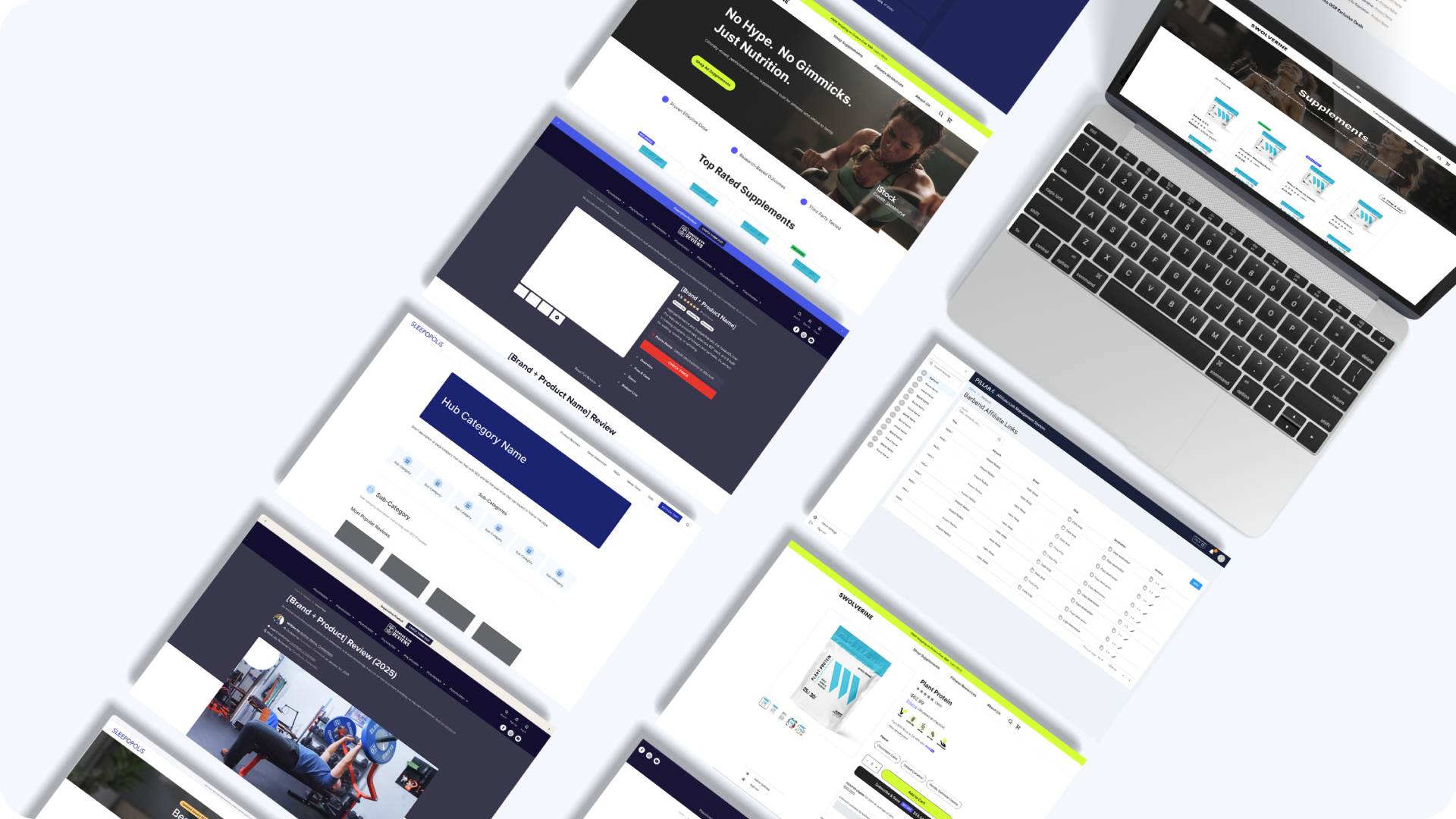
Making Performance Improvements Repeatable
Working across 20+ brands meant I couldn’t design one-off solutions for every site. I built shared design patterns, standardized CTA hierarchy and monetization placement across templates, and rebuilt parts of the design workflow around Claude and Claude Code so the team could move faster on every test. When a pattern wins on one brand, it rolls out to the rest.
What a Winning Test Looks Like
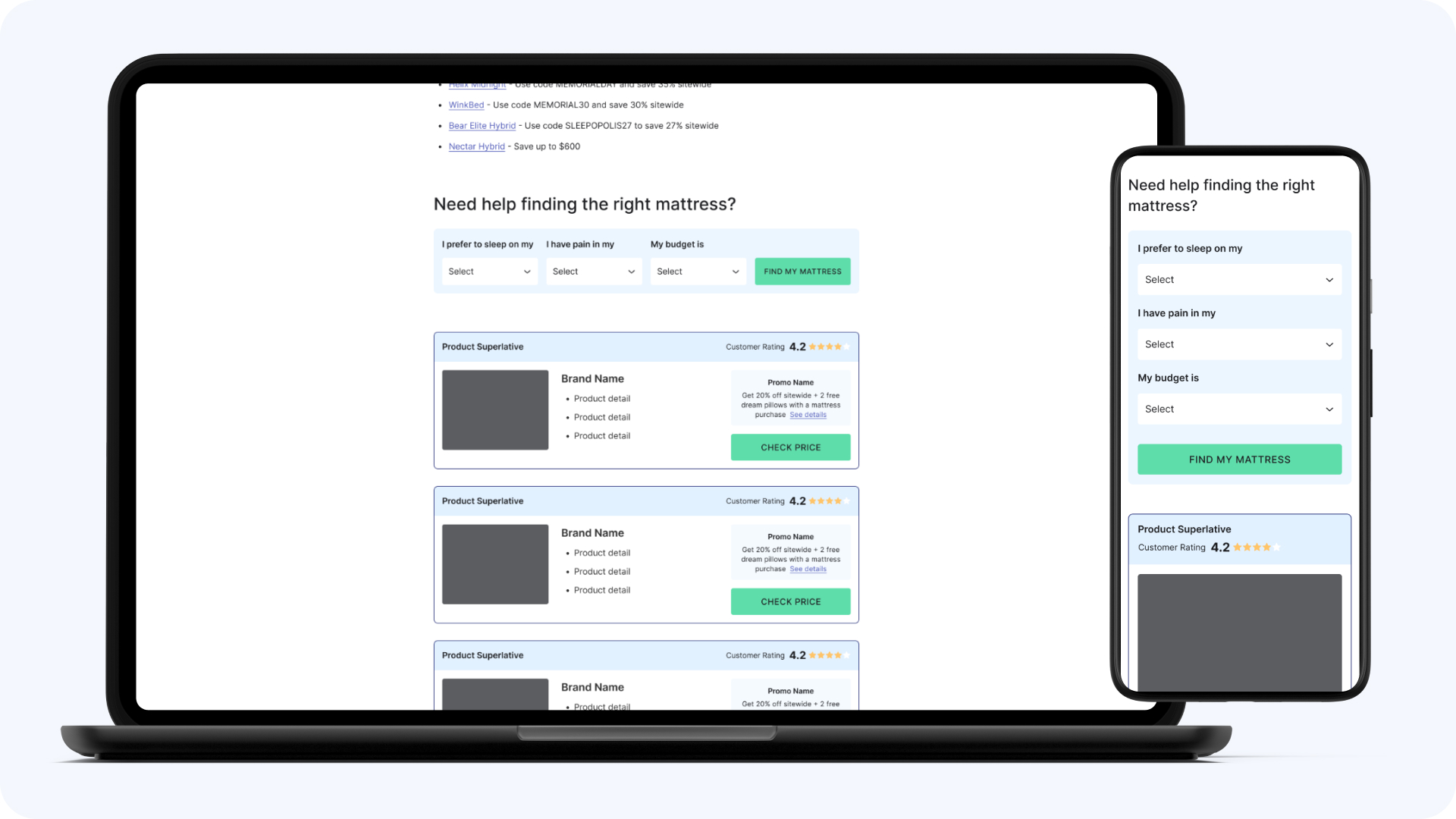
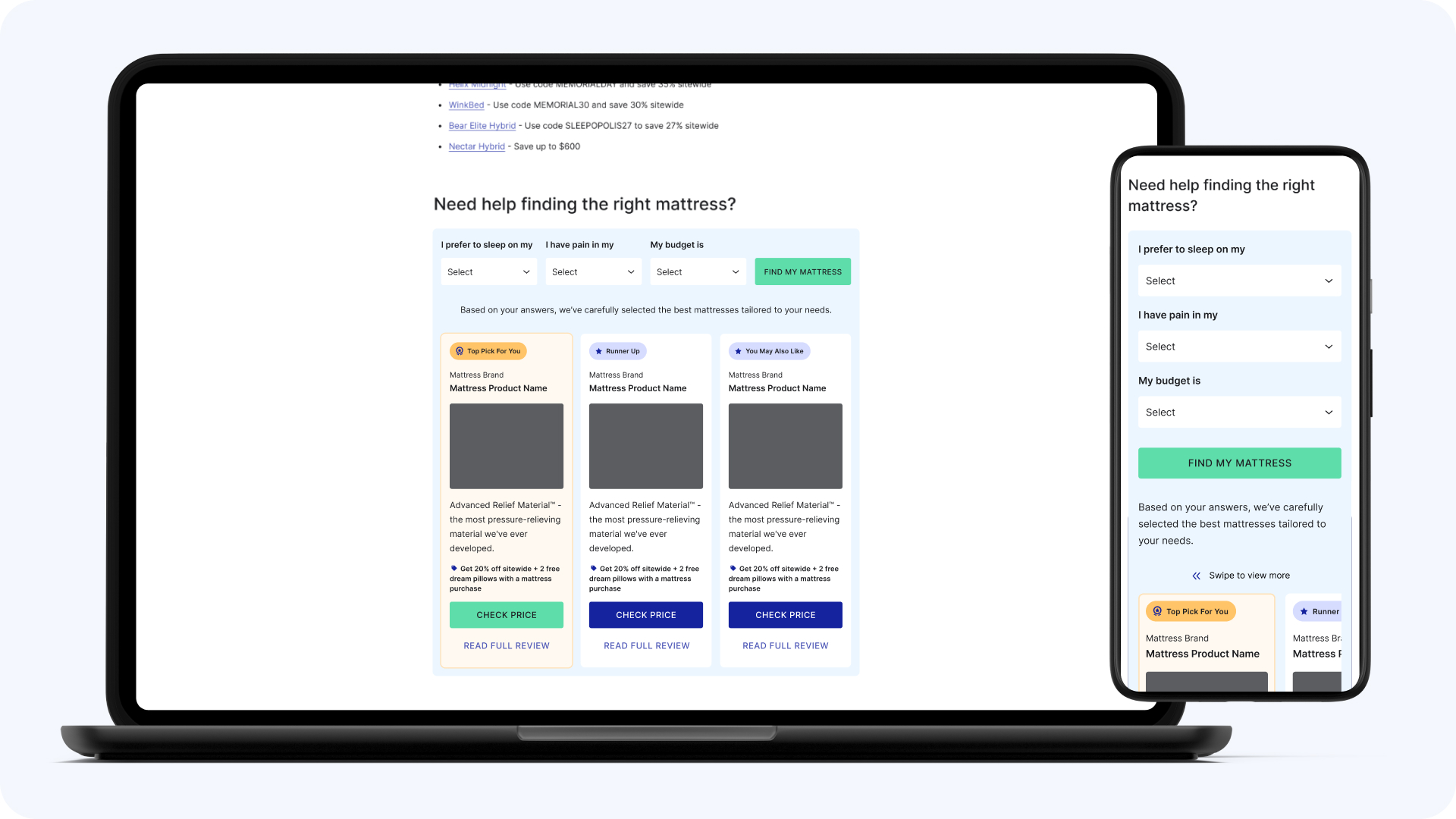
Visitors arriving from paid ads landed on long comparison pages and had to work out the right apick themselves. The hypothesis: paid traffic shows up with purchase intent but no guidance, so a short quiz routing each visitor to a recommendation would lift conversion without pulling clicks away from the product blocks. We tested a 3-question quiz on Sleepopolis paid pages, placed between the listicle and the product blocks.
Two weeks of data. Take rate held flat, quiz results converted at a higher rate than organic traffic, and the lift concentrated in search: +27% conversion at 97% significance. It lost on Performance Max pages, so those kept the control. The win is rolling out across the portfolio.
Quiz Submit Rate
Conversion LIft
Revenue Per Visit
Est. Annual Impact
AI in the Workflow
Over the last year I’ve rebuilt our team’s entire workflow around Claude, Claude Code, and Figma MCP. Design-to-production turnaround went from days to hours, and the team’s baseline output moved up with it. Most of this runs on tooling I built for the team: skills and plugins, documented and versioned like any other part of the design system.
Across the Lifecycle
AI shortens every phase of the design process.
- Pre-design research, competitor analysis, and strategy alignment built from structured prompting
- UX writing, marketing copy, and content variation generated and iterated in hours
- Information architecture and user flow drafts produced with Claude, refined with the team
- Design generation through Figma MCP, turning prompts directly into editable Figma artifacts
Design-to-Dev
AI has changed what design can deliver before engineering gets involved.
- A Figma to Claude to Optimizely pipeline that turns approved designs into built test experiences in about 30 minutes. The same build used to take 6-8 hours.
- A dev-handoff skill that reads the Figma file and writes requirements and the dev spec back into it as annotation frames. Done means engineers build without coming back with questions.
- A design-system extractor that scrapes tokens from any live site (color, type, spacing, CTAs) and imports them into Figma as styles and variables. Multi-day brand audits now take a few hours.
- Production-ready prototypes used for stakeholder sign-off before handoff
Scaling AI Across the Org
The biggest gains come from AI as a team practice.
- Weekly AI working sessions with the design team to share workflows, prompts, and what's working
- A UX audit skill that runs issue-first audits on any page, flow, or email and annotates findings in Figma, so every designer audits to the same standard
- Pushing AI adoption into product management and engineering so the whole team moves at the new pace
- Partnering with engineering on tokenization and block-level build patterns to reduce manual CSS across the portfolio
Featured Projects
The detail behind the numbers lives in these case studies.
Sleepopolis
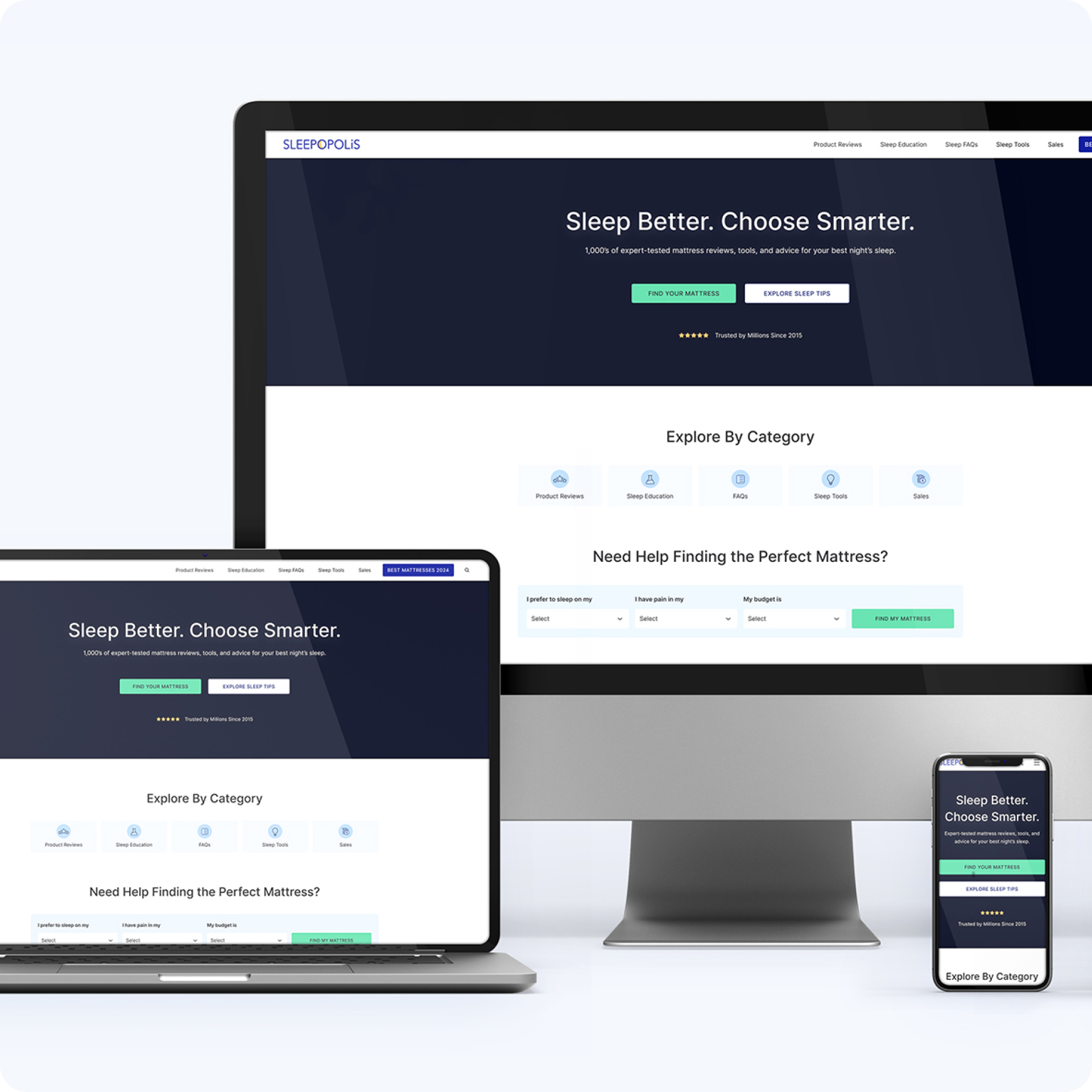
I lead UX strategy and experimentation for a high-traffic sleep affiliate platform: search intent, content structure, and monetization pathways. This is where the experimentation playbook was built.
Revenue Growth
Annual Users
Commerce Link Platform
An internal platform that replaced manual link tracking across every Pillar4 brand. I designed the full interface and interaction patterns around how editorial, SEO, product, and paid teams work.
using daily
for every affiliate link

Swolverine
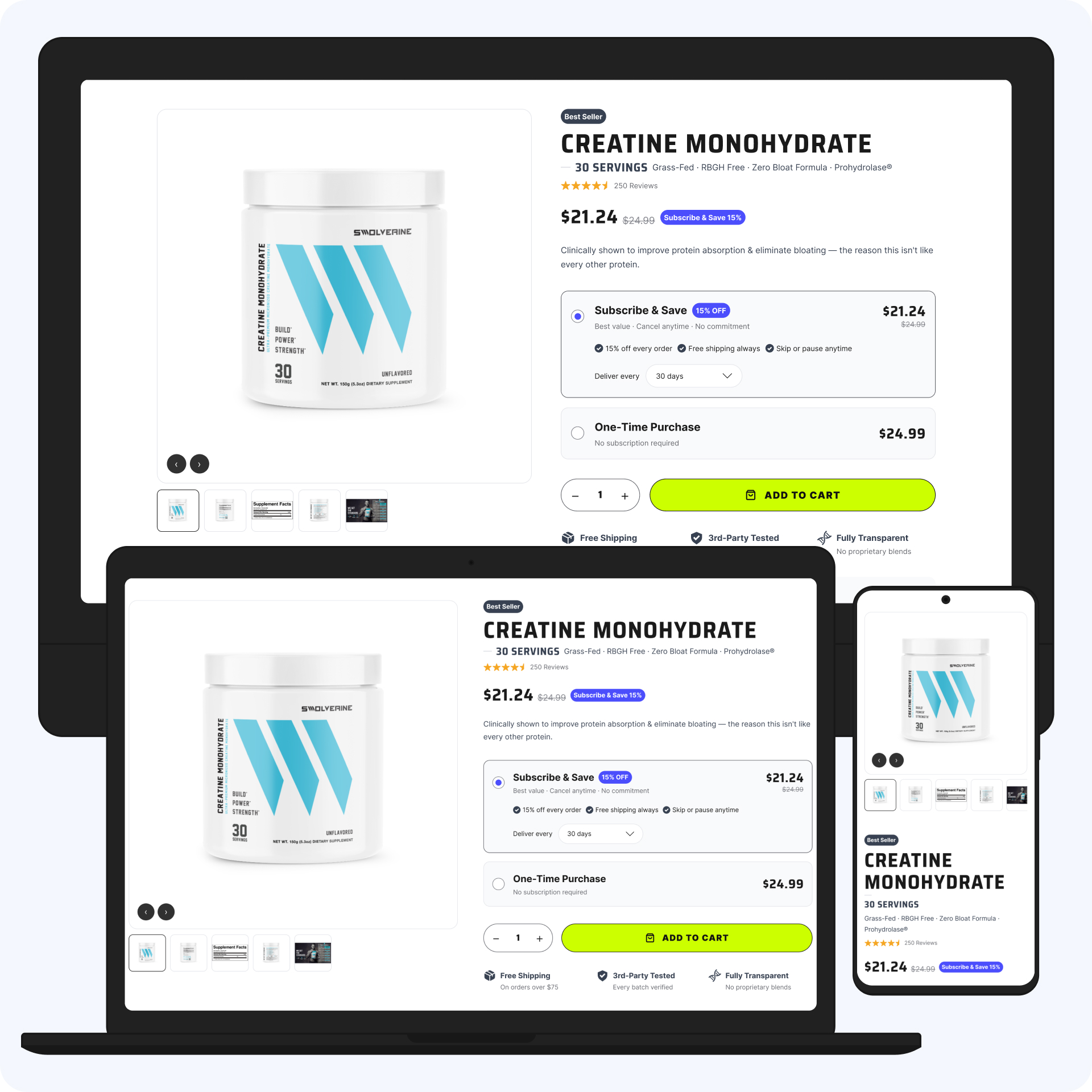
A full UX audit and redesign of a 100+ SKU supplement store, organized around ingredient education: navigation, product pages, and checkout. In engineering handoff now.
SKUs Restructured
Connected Redesign Areas
Garage Gym Reviews
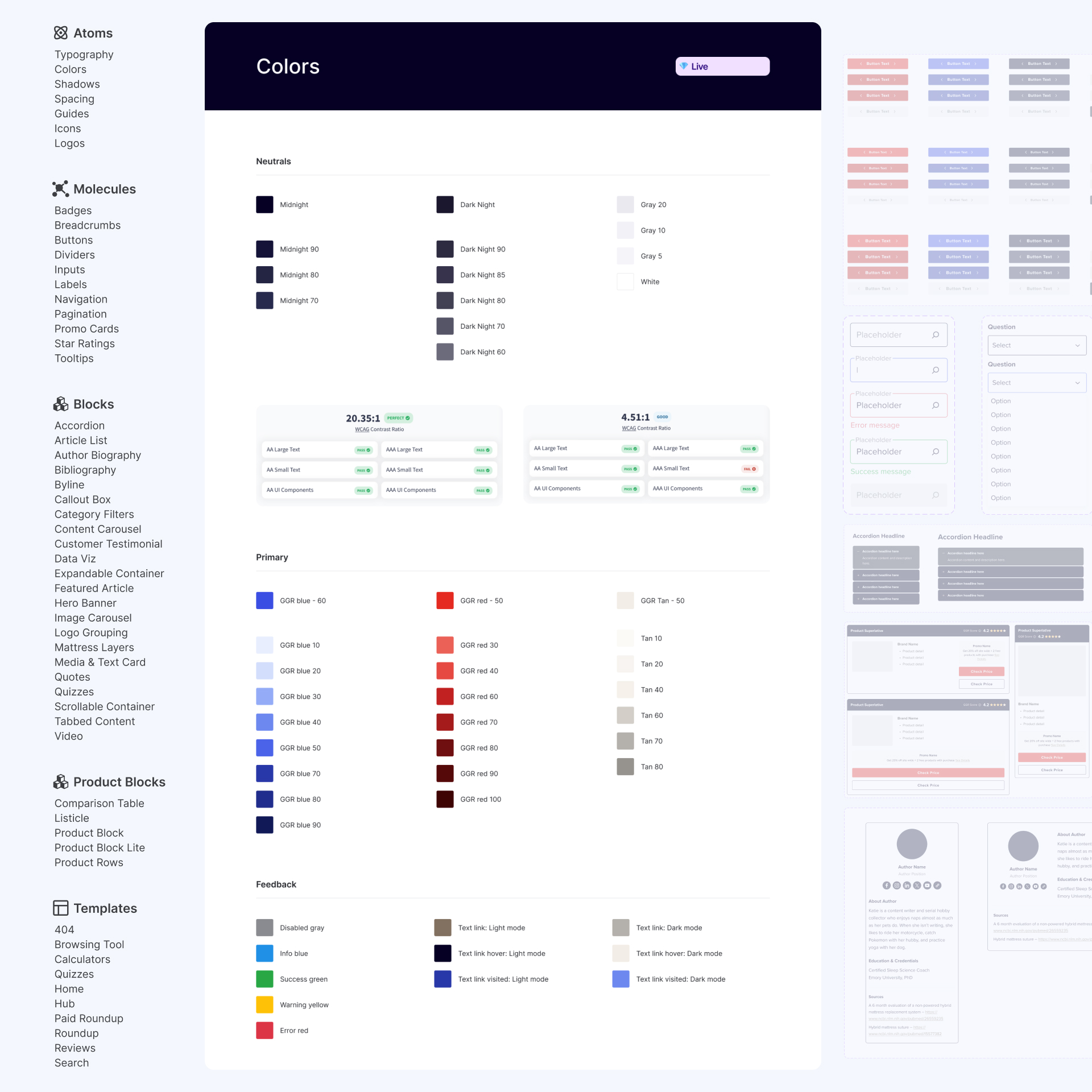
The proof the playbook transfers. I set UX direction for the fitness equipment review platform, delegated detailed design, and shipped the site’s first product pages.
Revenue Growth
Winning Tests
Pillar4 Work
Sleepopolis
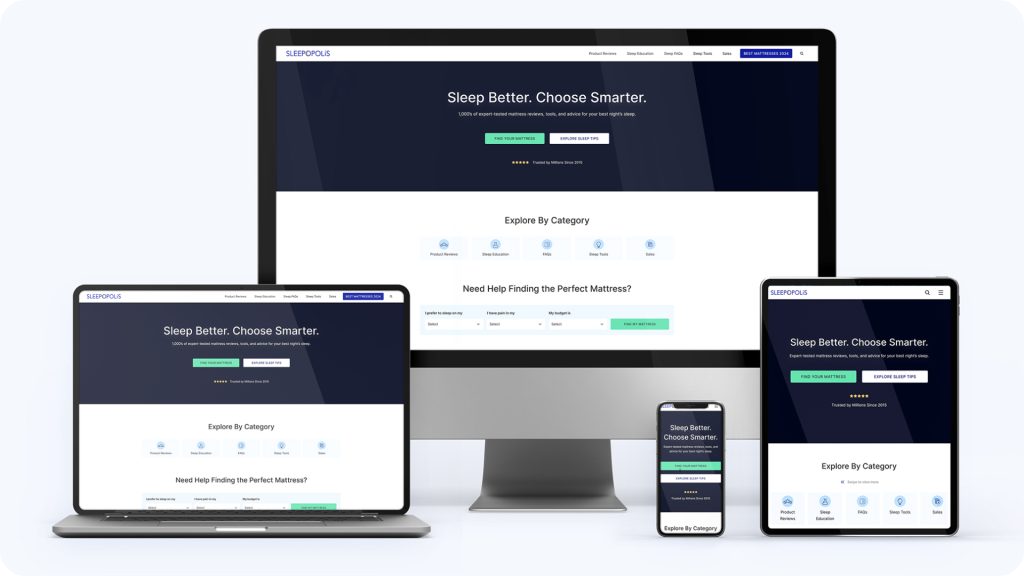
I lead UX strategy and experimentation for a high-traffic sleep affiliate platform. This is where the experimentation playbook was built.
Measurable Revenue
A/B Tests Run
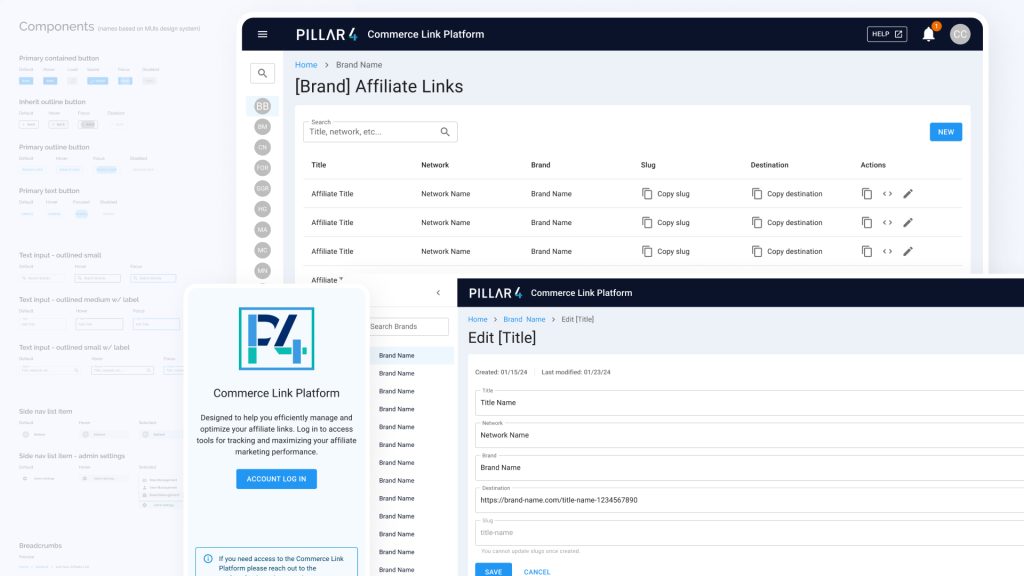
Commerce Link Platform
An internal platform that replaced manual link tracking across every Pillar4 brand.
Using Daily
of Truth
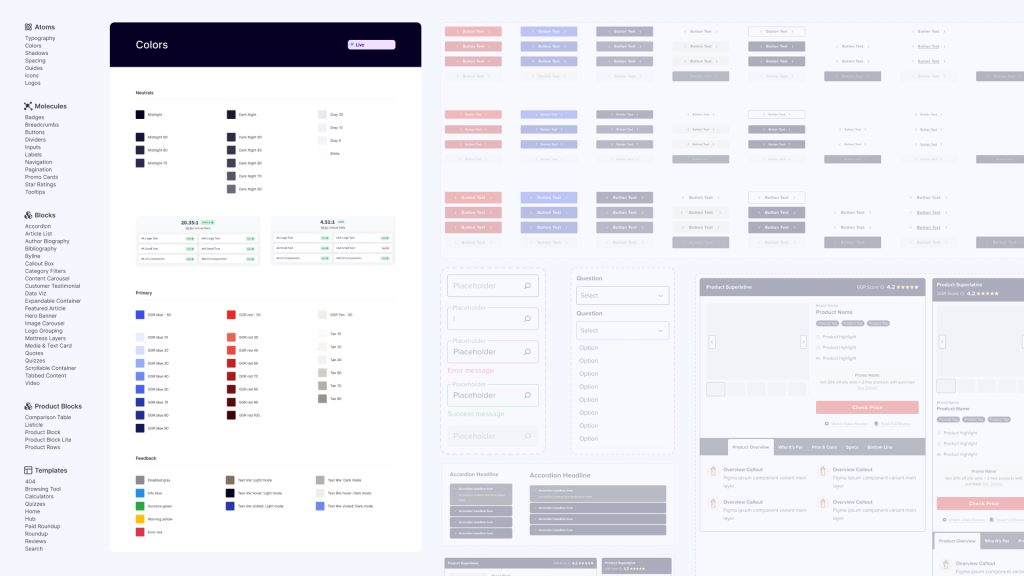
Garage Gym Reviews
The proof the playbook transfers. I set UX direction for the fitness equipment review platform, delegated detailed design, and shipped the site’s first product pages.
Revenue Growth
Winning Tests
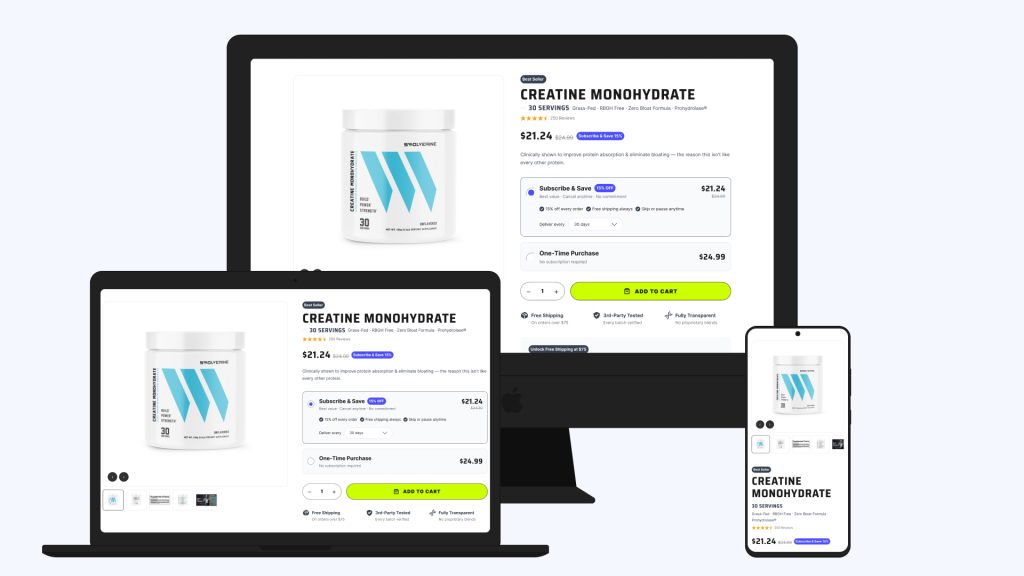
Swolverine
A full UX audit and redesign of a 100+ SKU supplement store, organized around ingredient education: navigation, product pages, and checkout.
SKUs Restructured
Connected Redesign Areas