Sleepopolis
Role
Senior Product Designer, design lead
Scope
Pillar4’s largest revenue brand
Tools
Figma, Claude, Claude Code, Figma MCP, Mouseflow
Timeline
2023 – Present
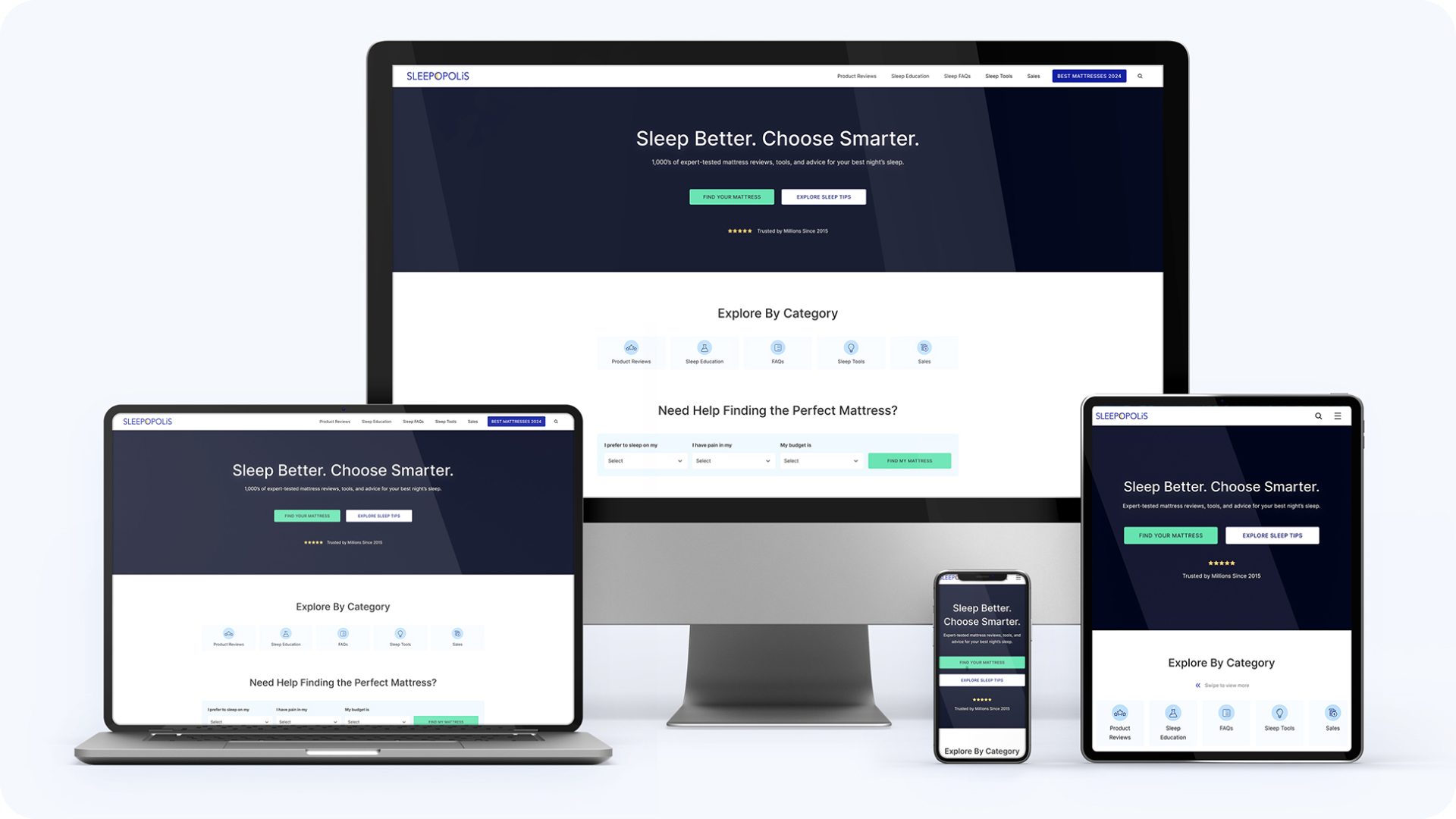
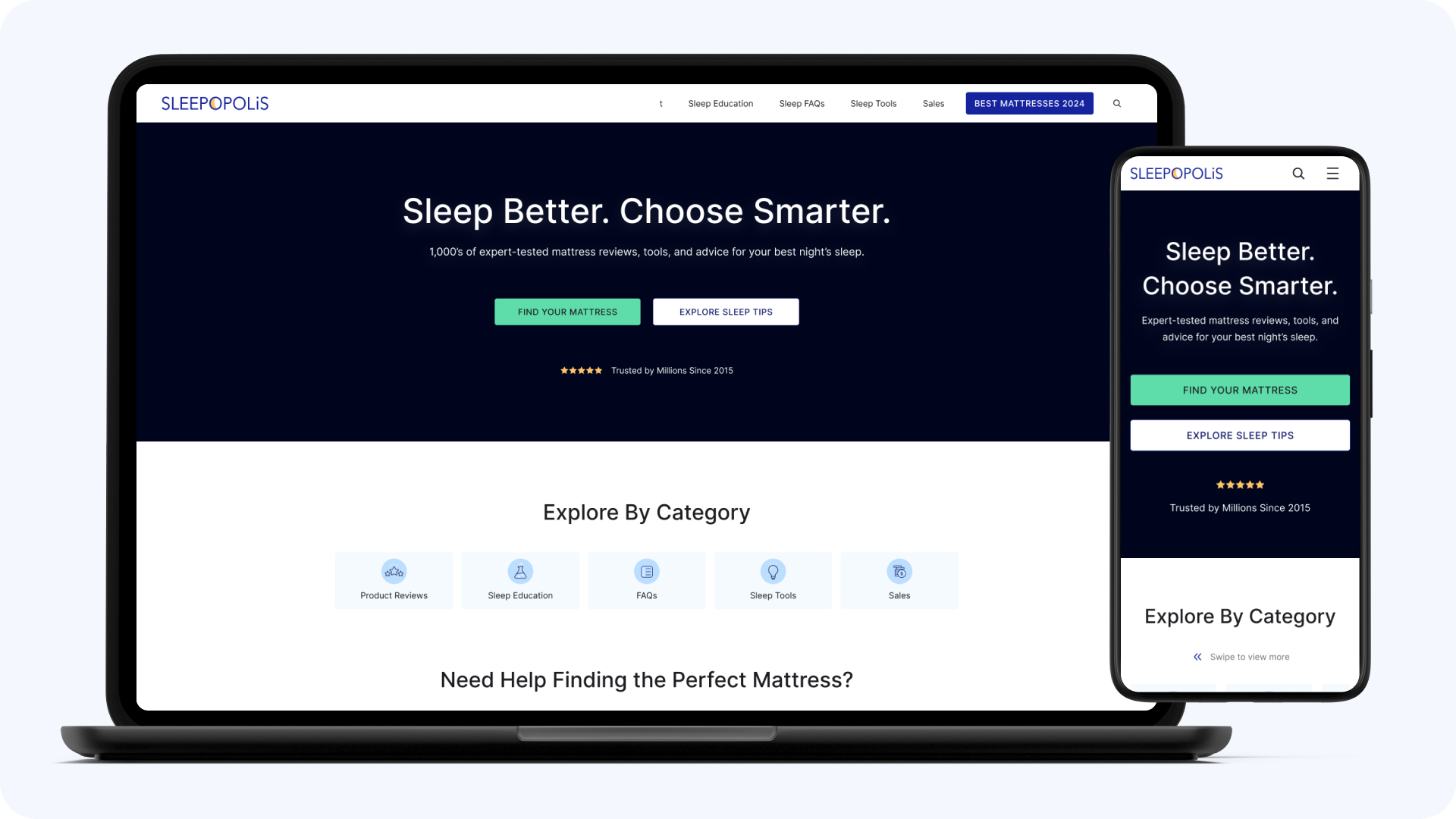
Sleepopolis is a high-traffic mattress review site and the largest revenue brand in the Pillar4 portfolio. The money comes from high-intent organic search: people deep in a buying decision, landing on long-form reviews, converting through affiliate links. Over three years I led UX strategy and experimentation across content structure, navigation, and monetization, and the program generated $15M+ in incremental revenue without spending the rankings that paid for it.
Incremental Revenue
Avg. Conversion Lift, All Tests
Avg. RPV Lift, All Tests
Winning Tests
The Problem
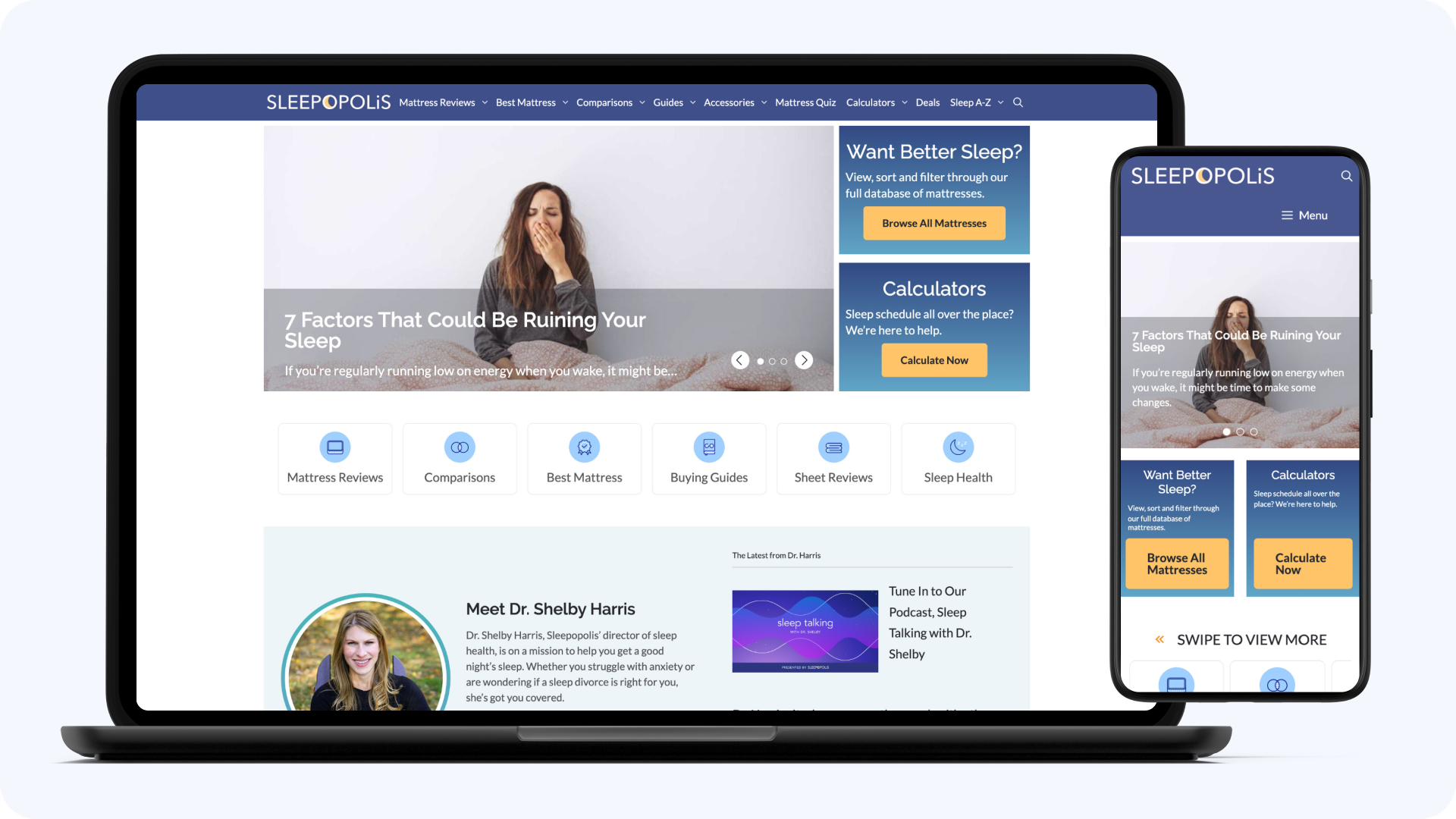
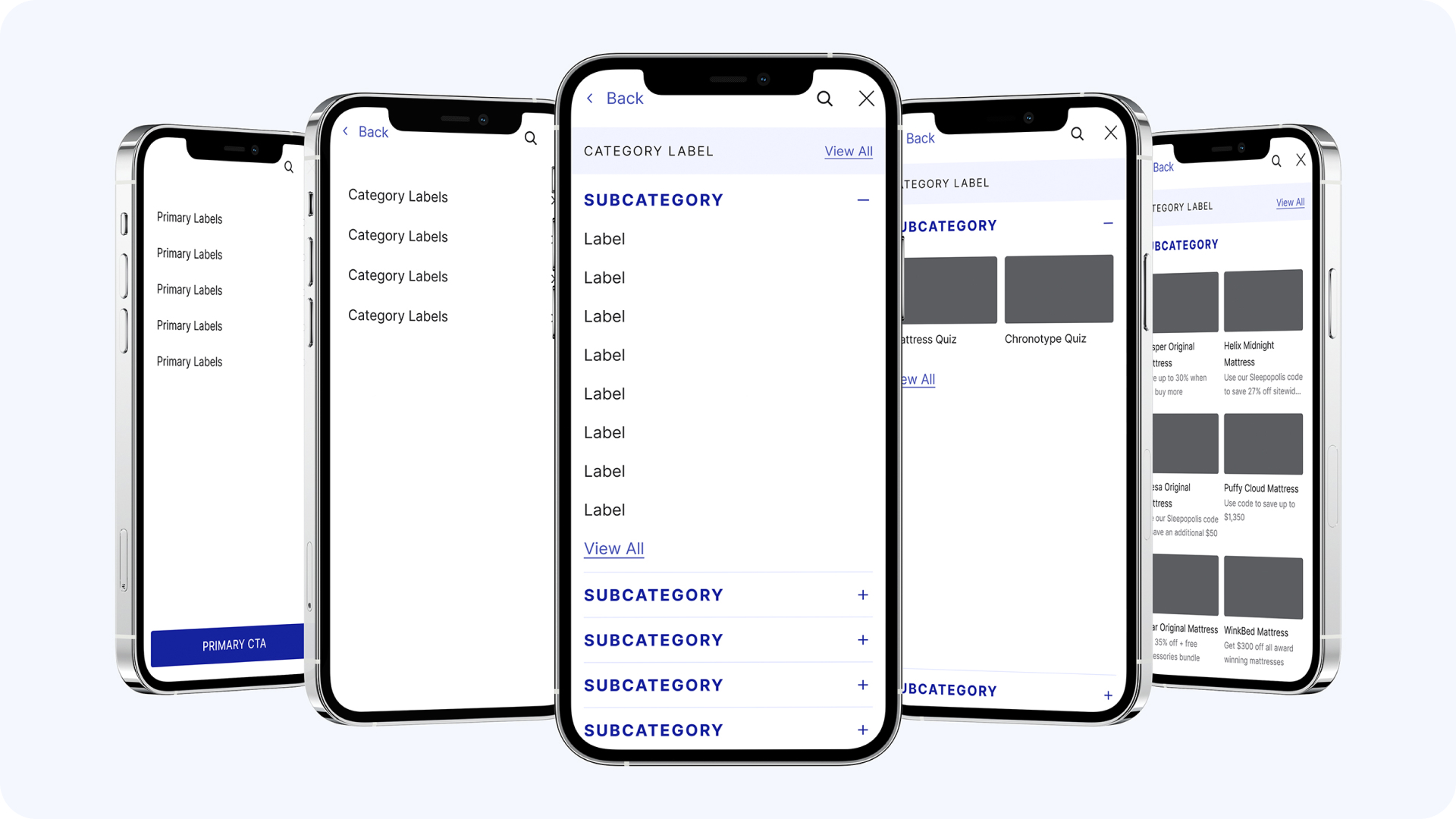
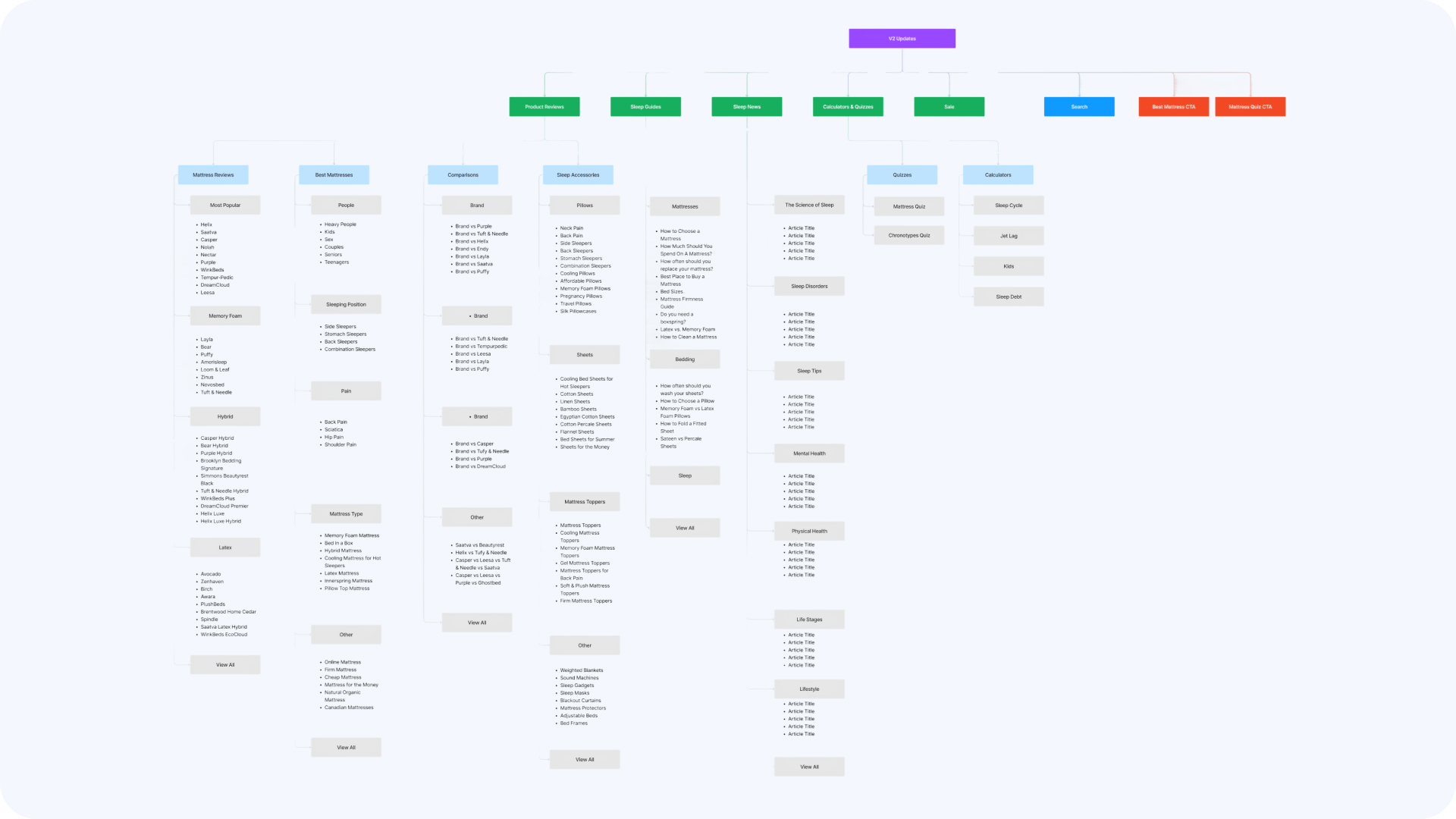
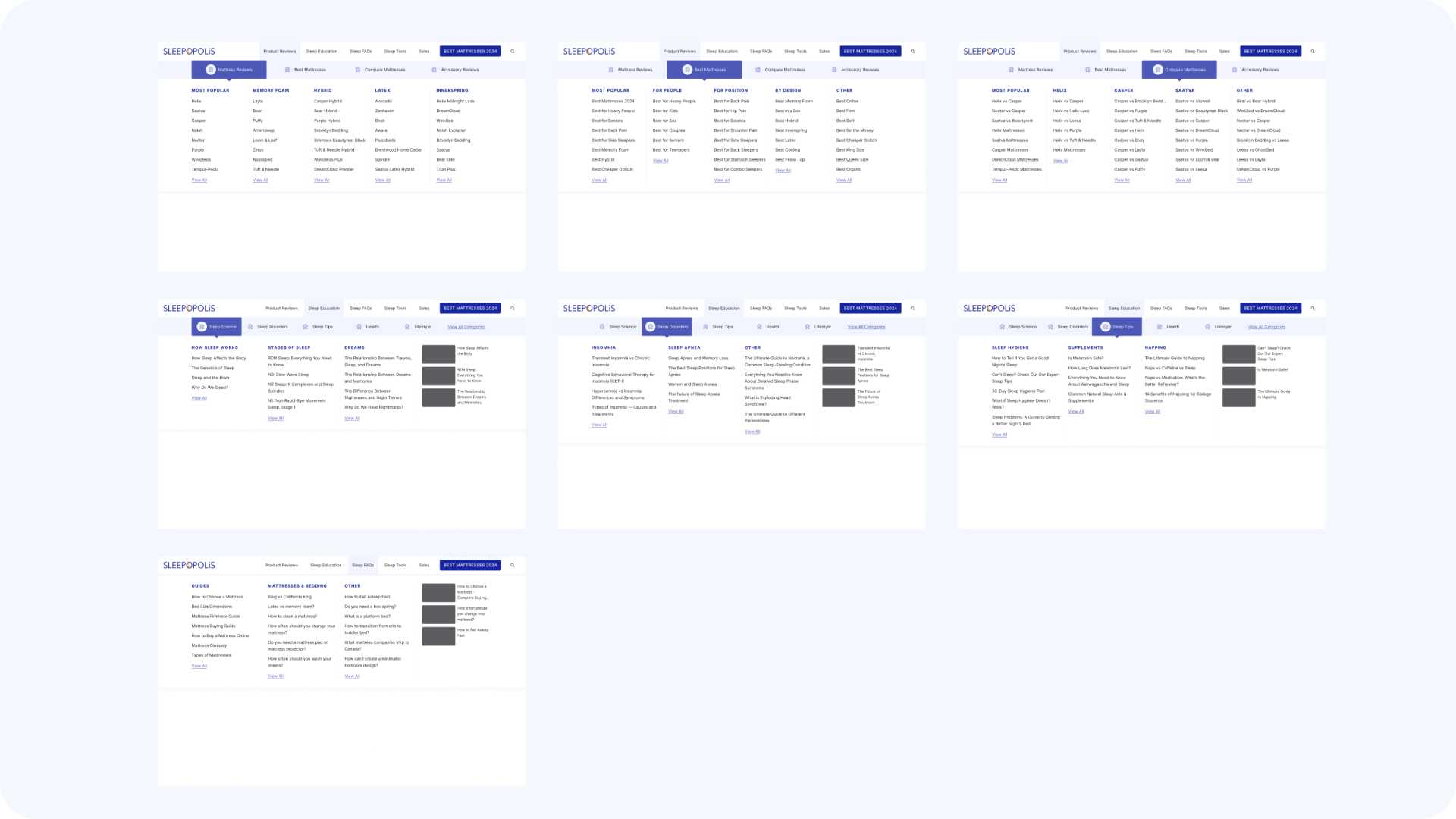
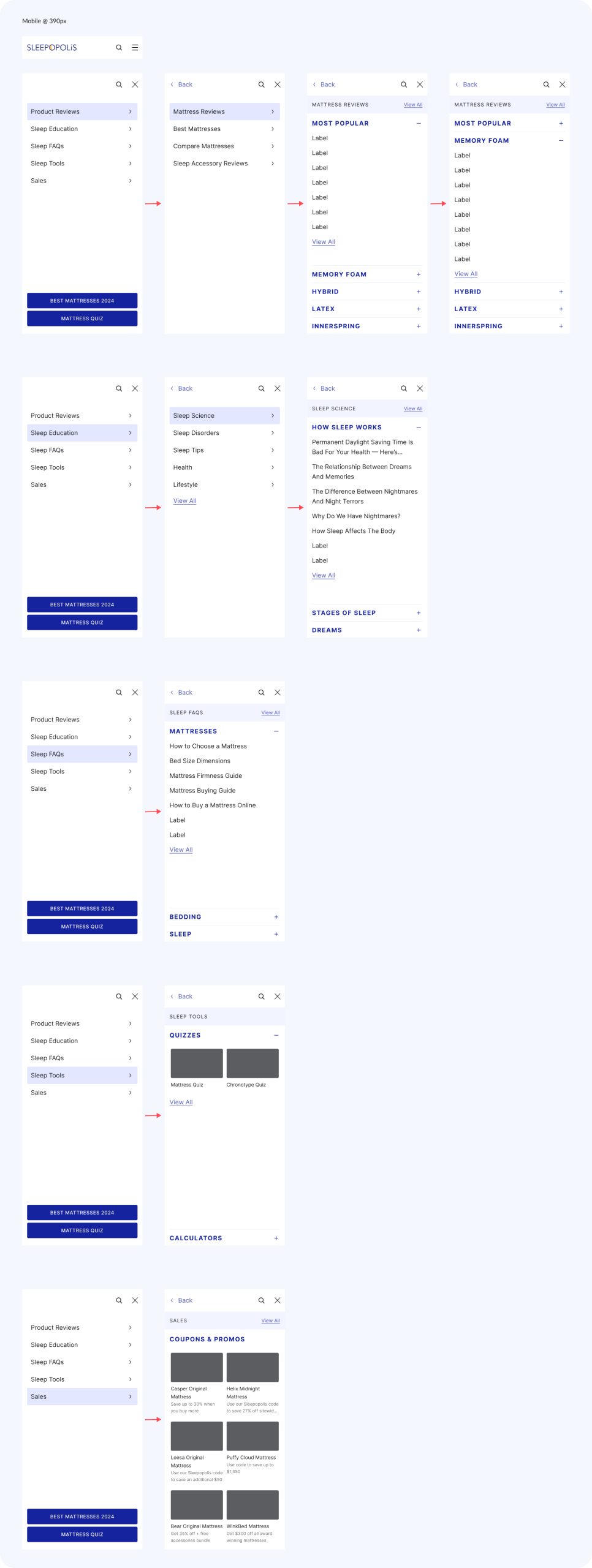
The problem was structural. Inconsistent UI weakened the authority signals a review site lives on. Navigation didn’t match where users were in their decision. Monetization sat buried under thousands of words of editorial. And the site’s best conversion tool, a guided quiz, was hidden behind a navigation path most users never took.
The constraint that shaped everything: this traffic comes from rankings, and structural changes put rankings at risk. Break the SEO and the revenue problem solves itself by removing the revenue.
What Made the Money
- High-intent organic traffic from search
- Editorial authority and trust signals
- Clear product comparison structure
What Got in the Way
- Inconsistent UI patterns weakened authority
- Navigation misaligned with purchase intent
- Monetization buried deep in long-form content
- The quiz hidden behind navigation
What I Did
The bet behind all of it: treat the site’s editorial authority as the conversion asset, and align page structure, navigation, and monetization with where users actually are in their decision. Test everything, roll out nothing unproven.
One Coherent Product Instead of a Collection of Pages
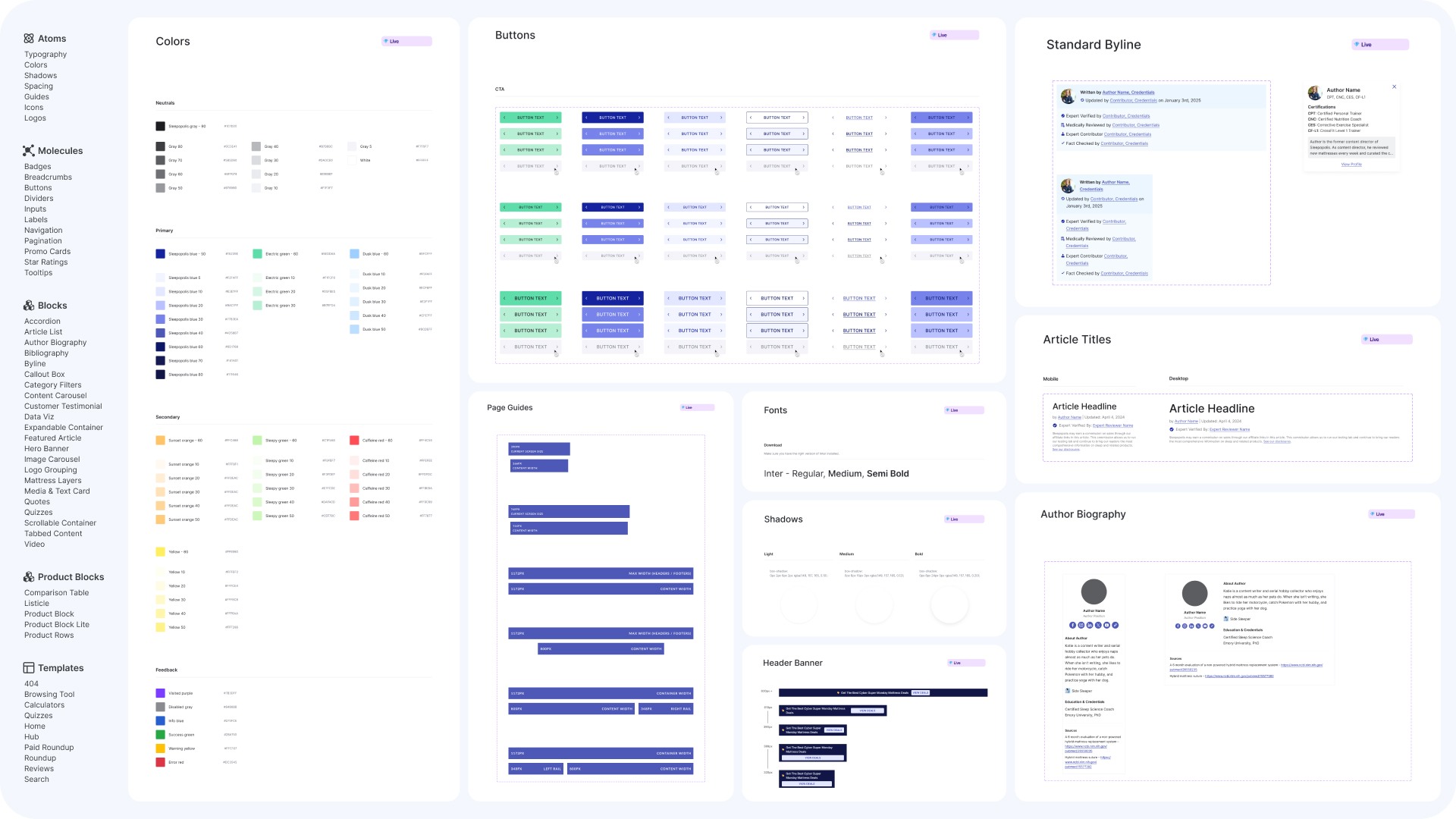
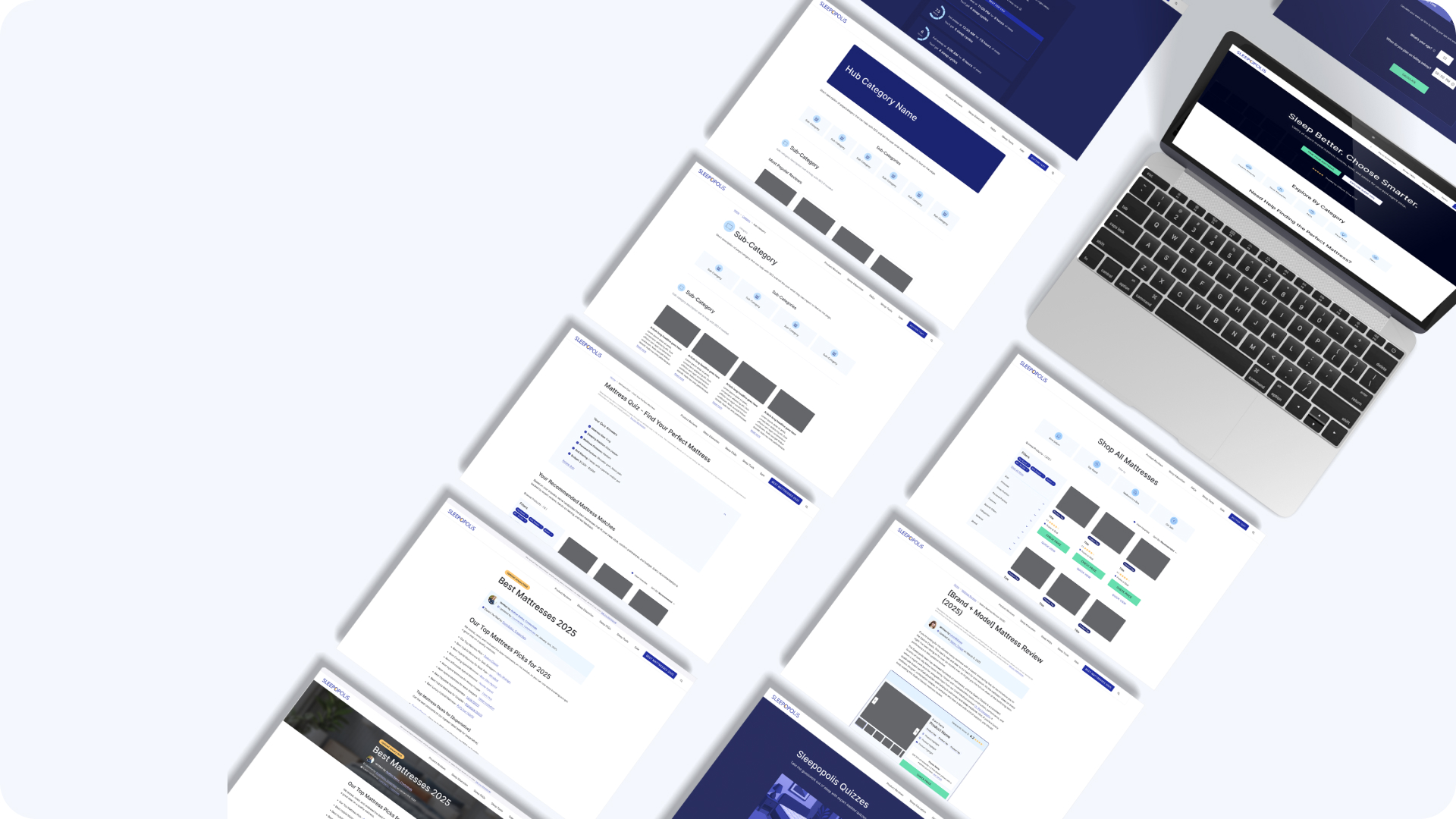
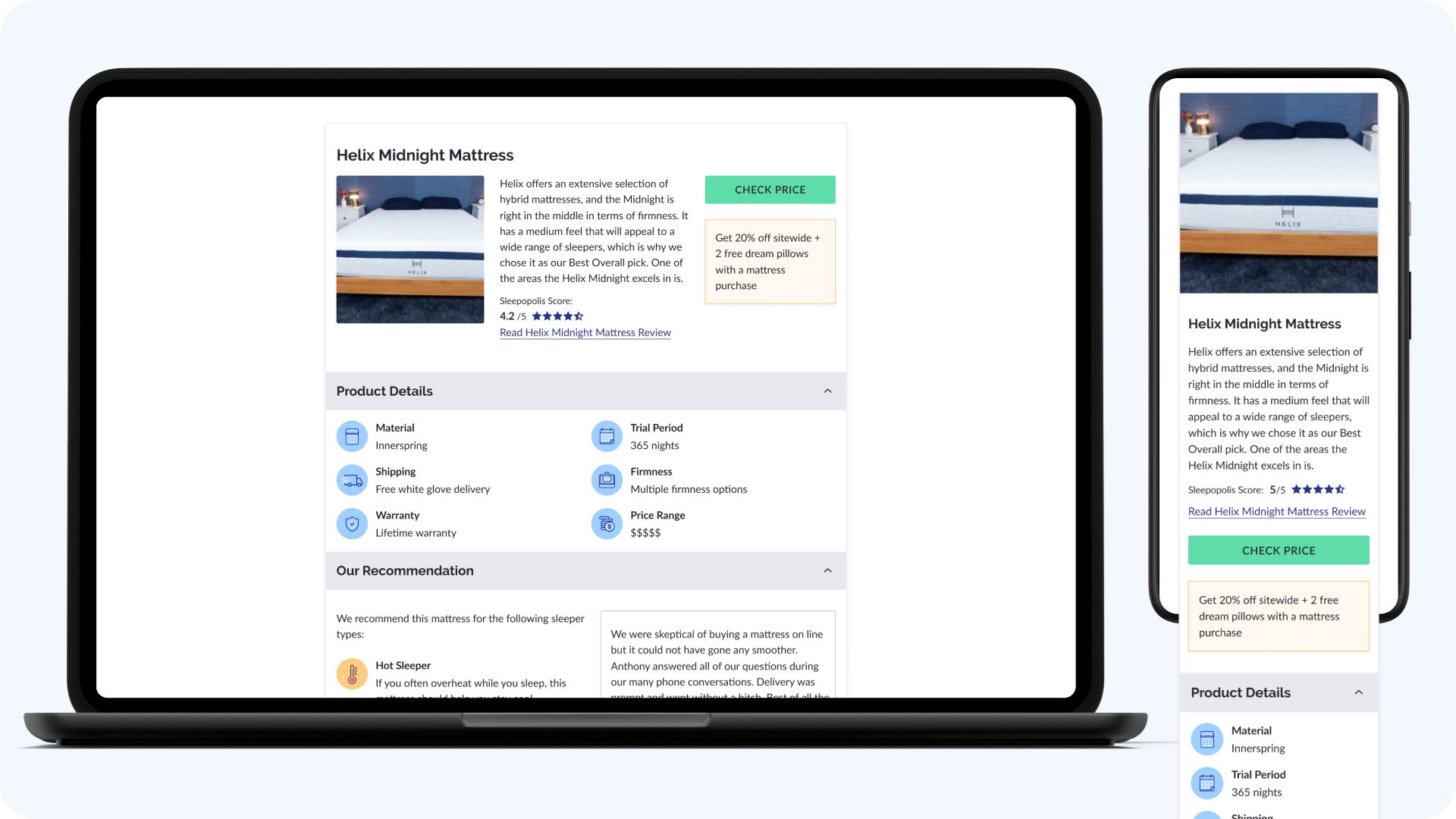
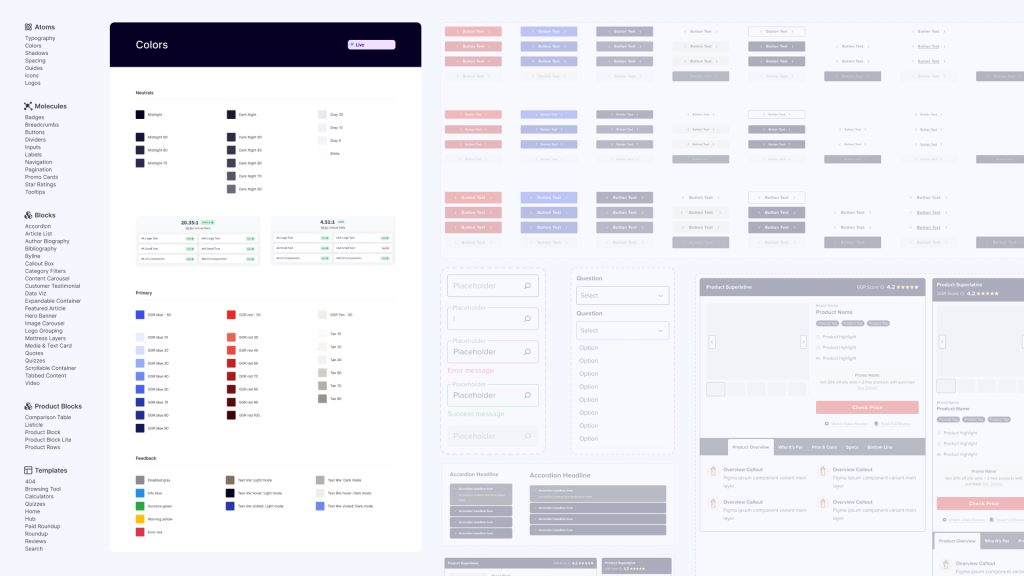
Unified the brand system across page templates so the site read as one product on every page type. Standardized hierarchy across monetized pages, improved trust signal placement, and created repeatable structures the experimentation program could build on.
Content Monetization Optimization
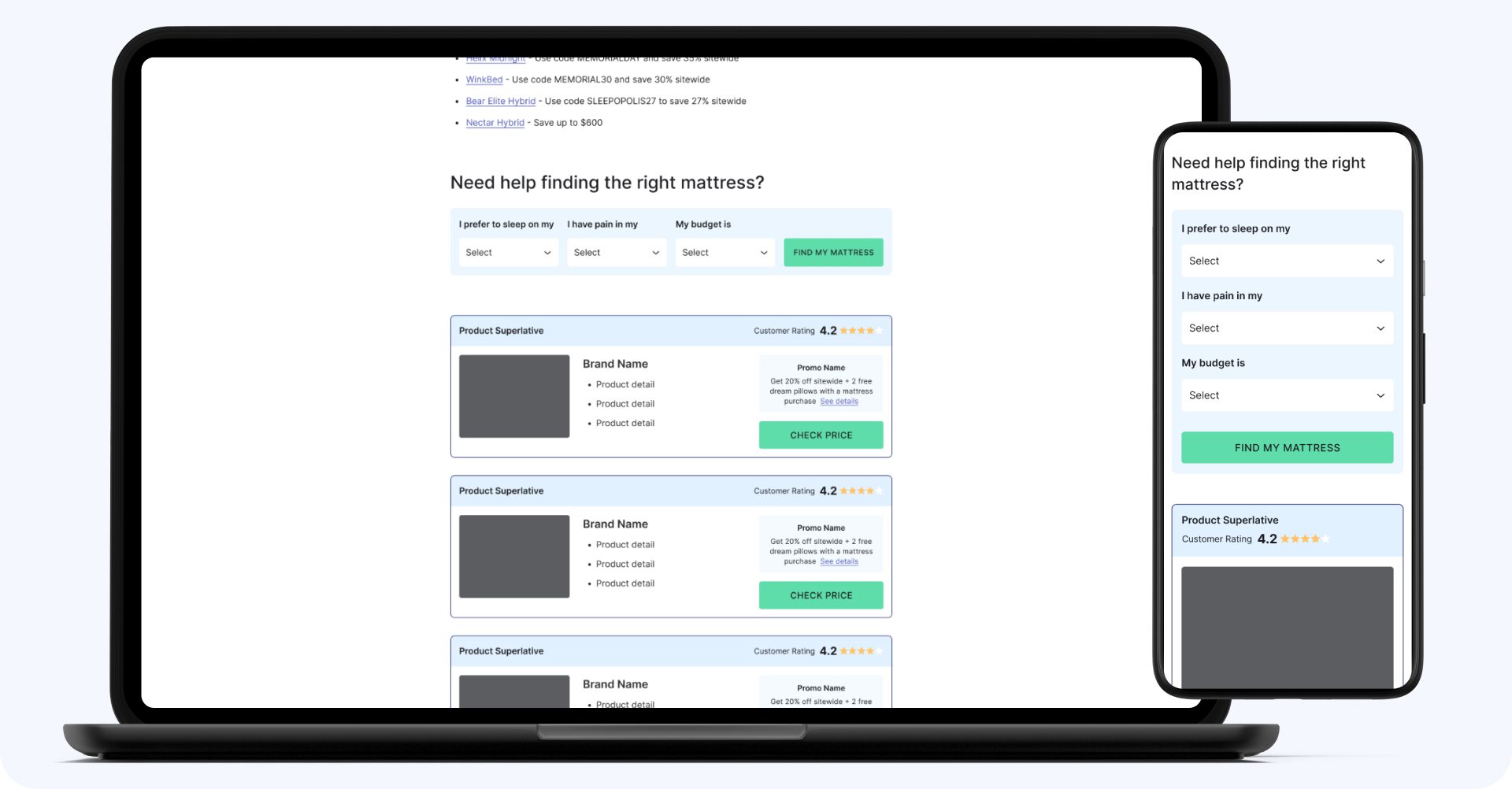
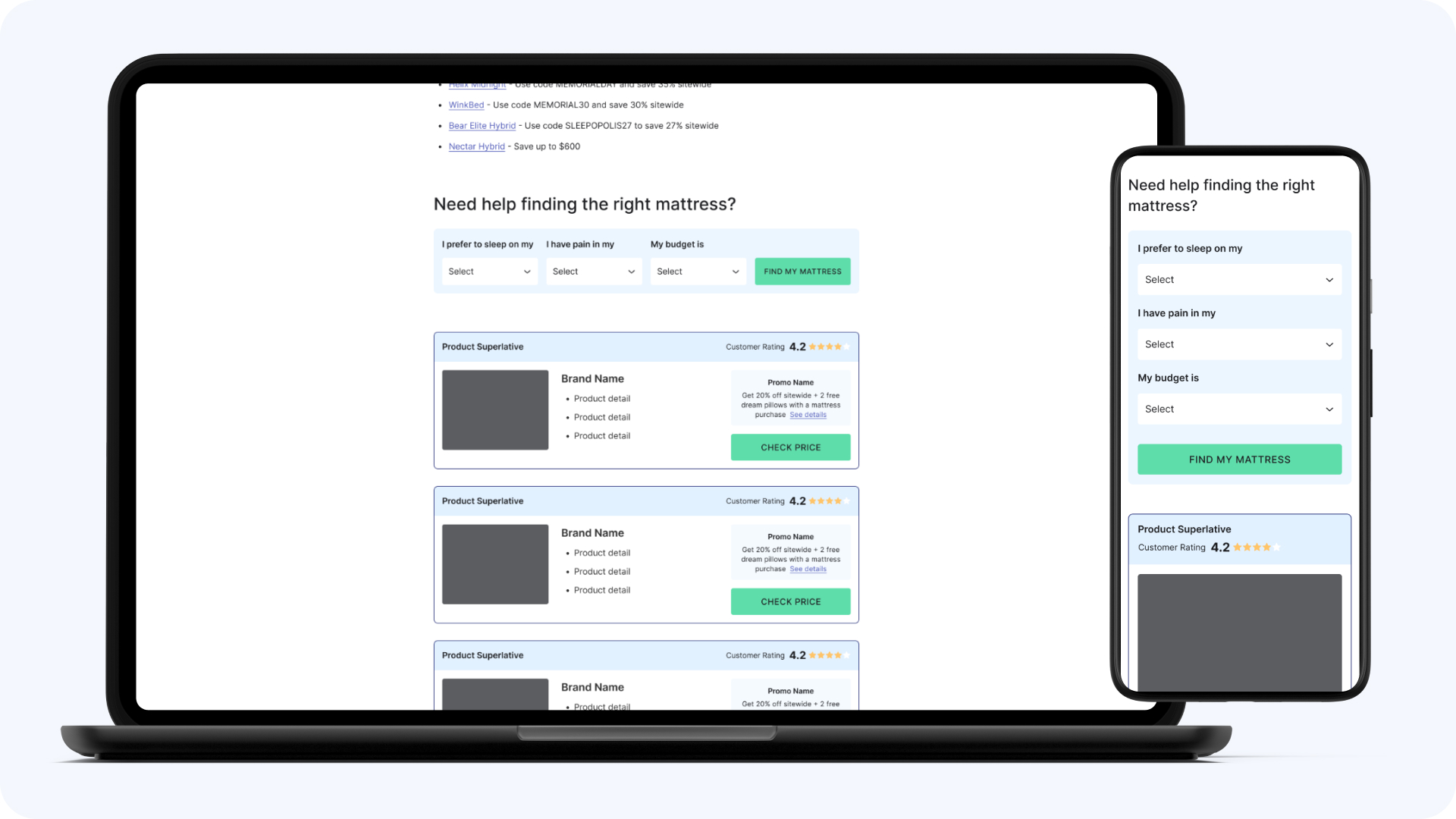
Long-form reviews caught most of the traffic, but the monetized blocks sat too deep in the page. I used Mouseflow scroll and interaction data to restructure where product recommendations appeared, and prototyped the structural variations with Claude and Figma MCP to shorten every test cycle.
From Buried Feature to Best Performer
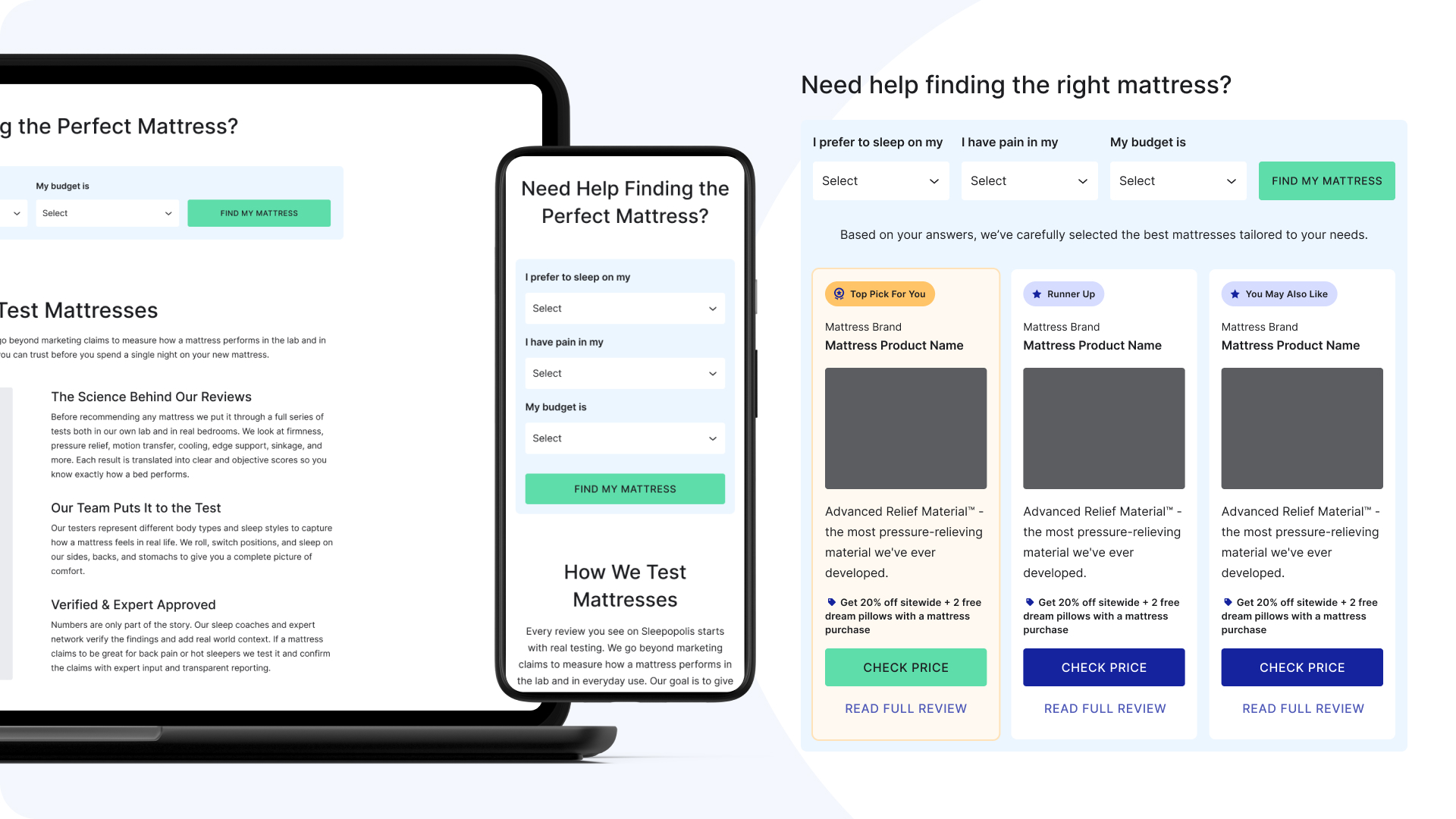
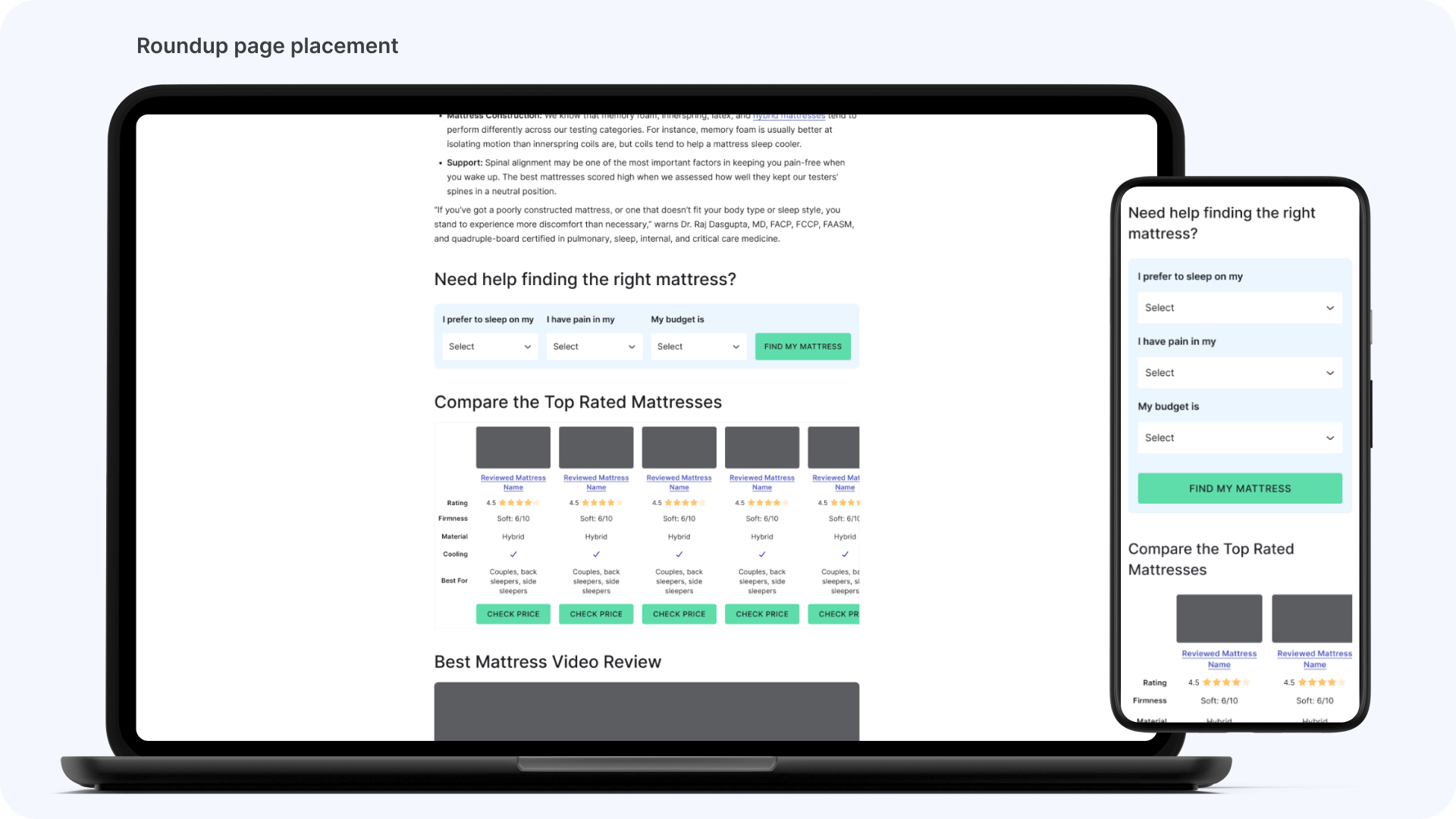
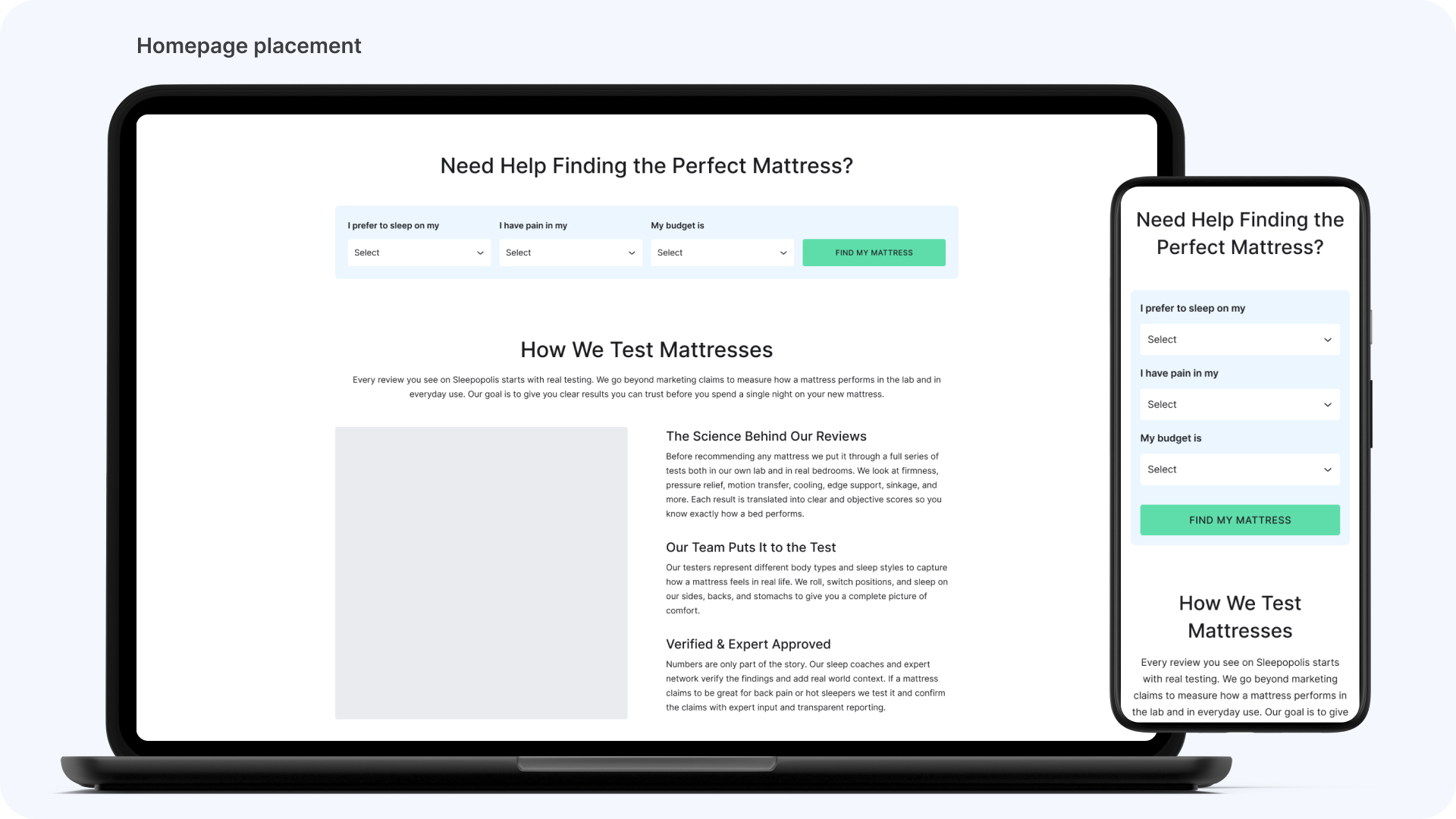
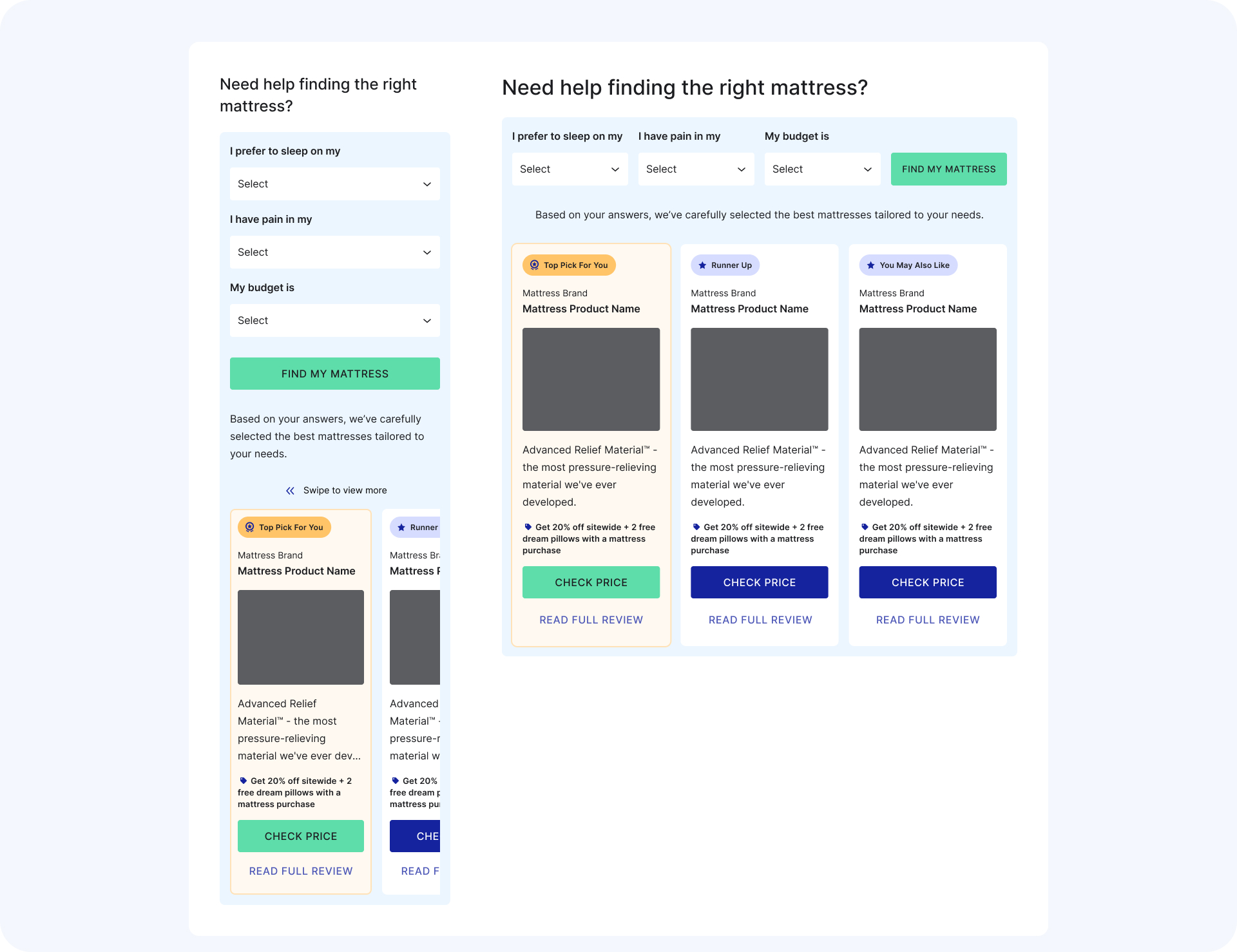
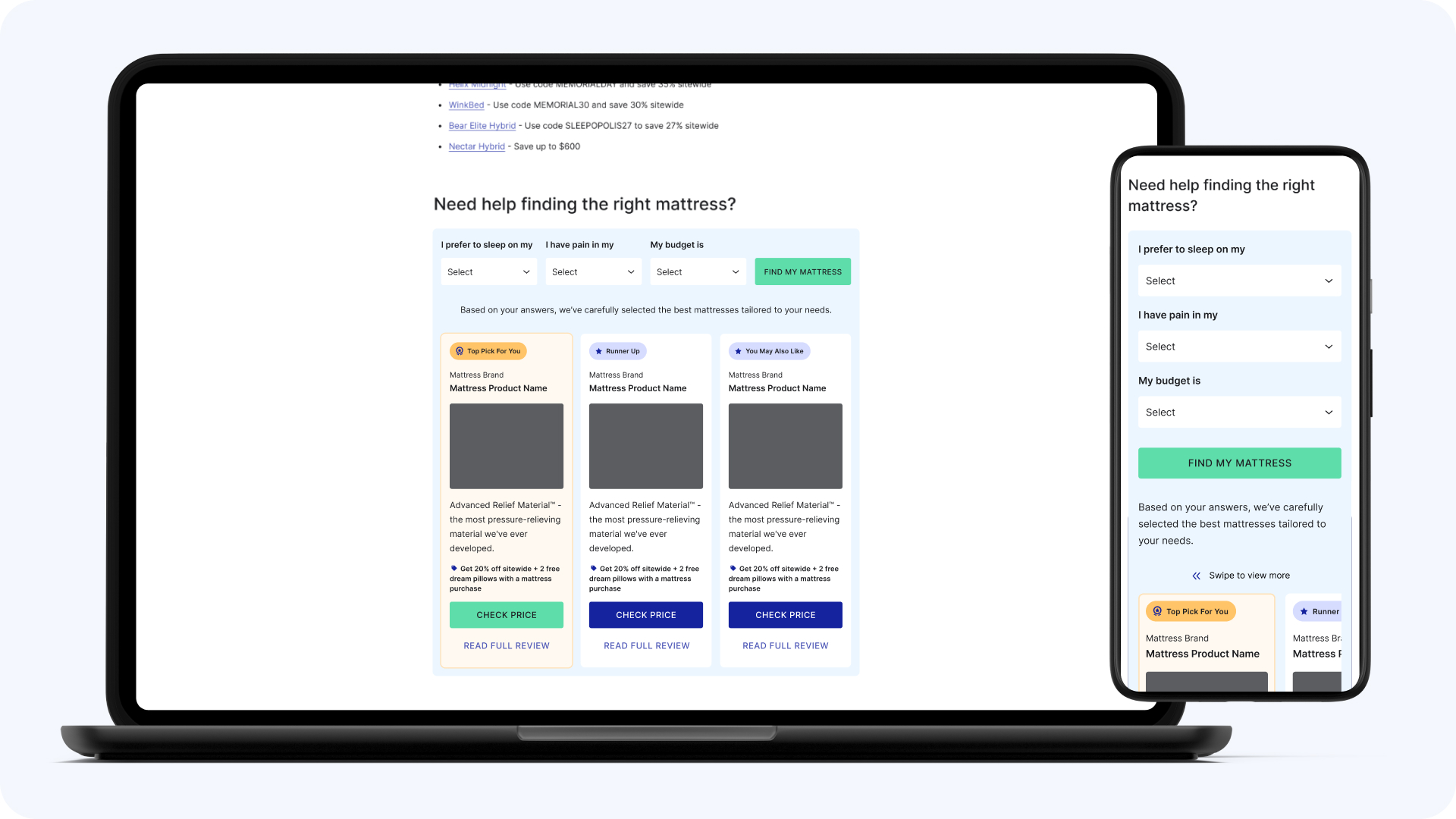
A guided quiz that narrows options by sleep preference, budget, and body type, moved from behind navigation into the roundup pages where the traffic already was. We ran it as a three-way split, testing placement against the comparison table, and conversion lifted +49% with take rate flat. We rolled out the variant that kept the comparison table in place: the same conversion result, flatter take rate, and less work for editorial. The pattern later shipped on paid landing pages, worth an estimated $1.28M a year. That test lives on the Pillar4 Media page.
The Test That Proved the Retheme
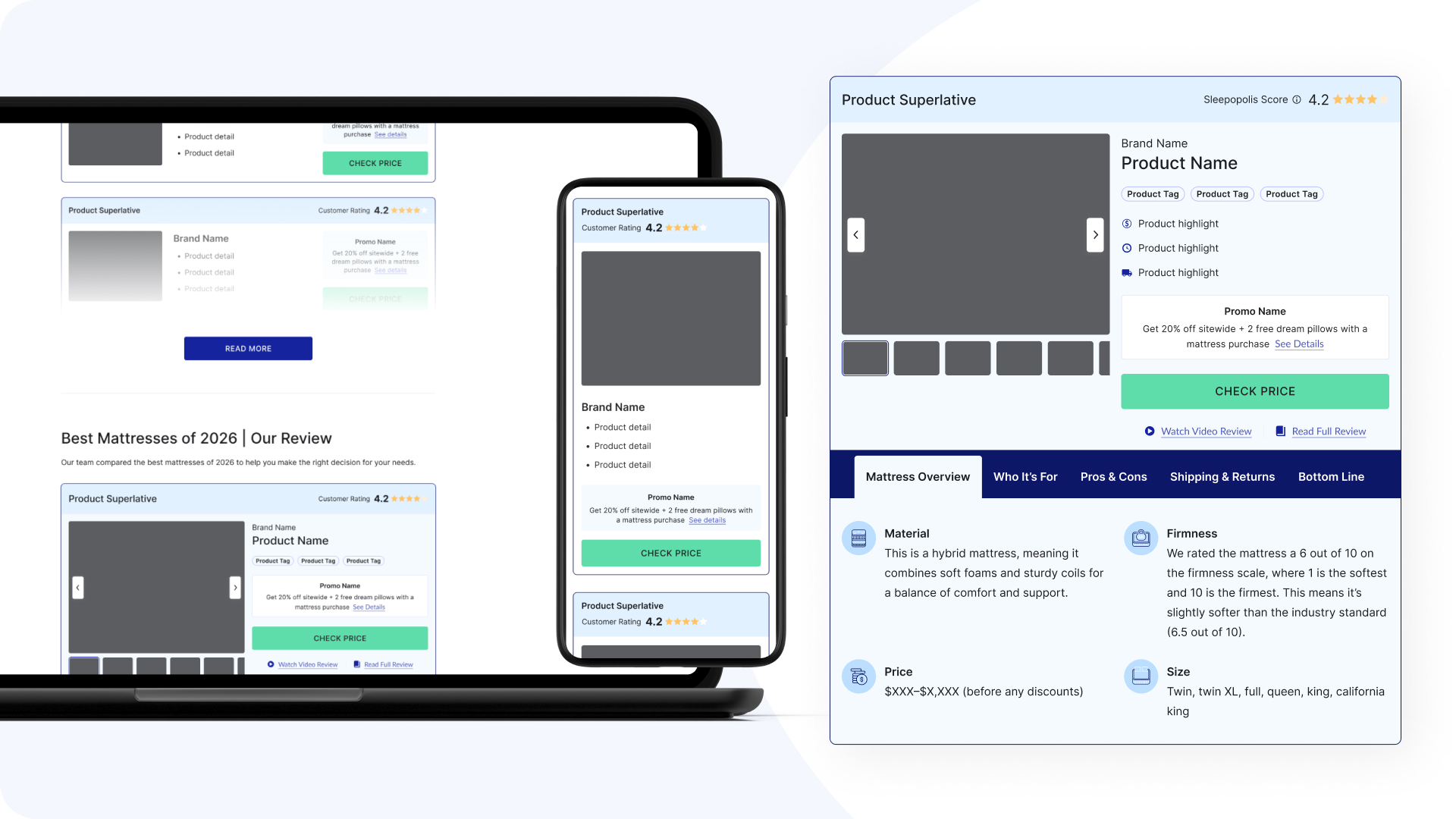
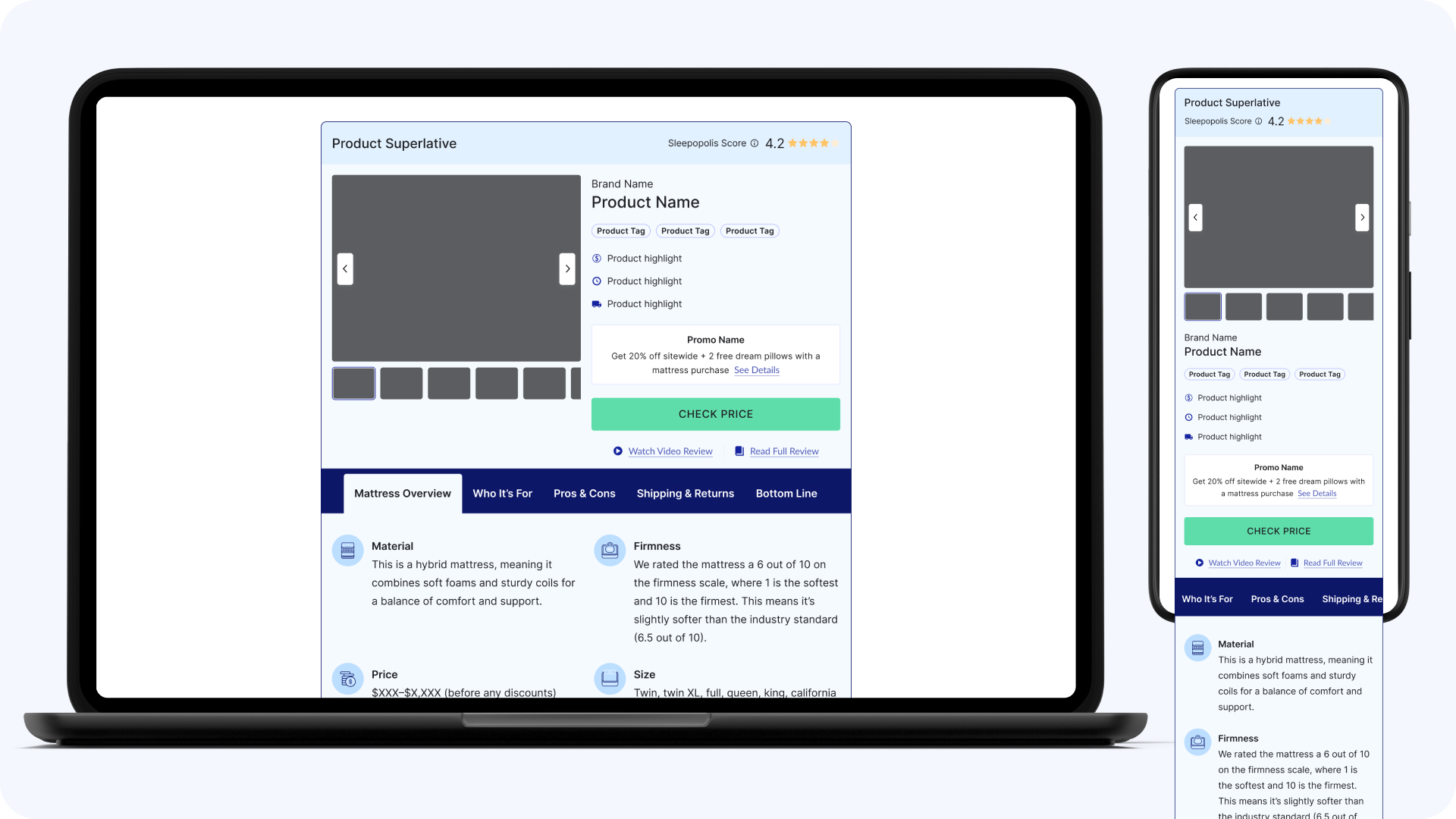
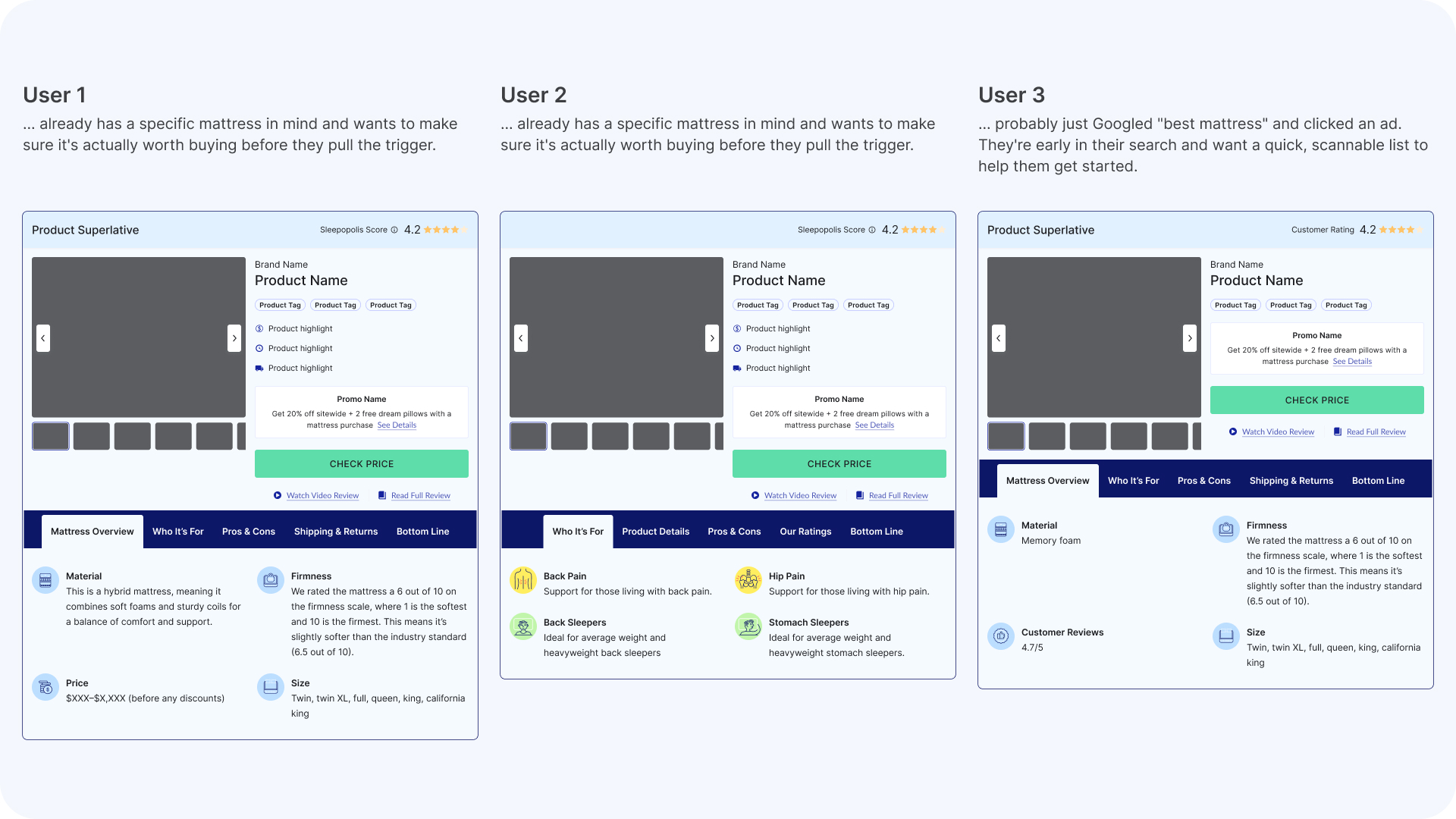
Coming out of the retheme, we redesigned the foundational product block, the monetization unit that carries the affiliate clicks on roundup pages. The changes were unglamorous: background color, a border, header contrast, promo box color, and clearly defined tab states. The hypothesis: users weren’t engaging with the tabs because they didn’t read as tabs, and a block with clearer hierarchy would earn more interaction and more clicks without any structural change.
19 days of data. Take rate, the test’s KPI, moved +3% on the highest-exposure monetization unit on the site. Unique engagement with the tabbed section rose 48%, conversion moved +27% with the gains concentrated in our top brands, and the redesign rolled out across every foundational product block on Sleepopolis. A background, a border, and tab states that read as tabs, worth an estimated $1.35M a year: the whole argument for caring about small things, in one test.
Take Rate, Primary KPI
Tabbed Engagement
Revenue Per Visit
Est. Annual Impact
The Tradeoffs
Every structural test carried SEO risk, so SEO had a seat at every design review and real veto power. We chose incremental structural tests over the big-bang redesign the site arguably needed, because a redesign that tanks rankings is a $15M mistake in the wrong direction. The cost: three years of patient, test-sized changes instead of one satisfying overhaul. The payoff: the rankings held, and the revenue compounded on top of them.
What It Changed
Three years of test-sized changes added up. The best single RPV test came in at +105%, and the rankings that feed the site stayed intact. The template structures standardized here became the experimentation surface for the rest of the portfolio, and the quiz proved guided conversion works in affiliate content, which changed what we were willing to test on other brands. Sleepopolis is also where the program learned its discipline: hypothesis first, SEO in the room, roll out only what wins. That discipline, more than any single test, is what the $25M+ portfolio number is built on.
AI on This Project
- Structural variants prototyped with Claude and Figma MCP before anything went to build, shortening every test cycle
- Tests built through the Figma to Claude to Optimizely pipeline in about 30 minutes each, down from 6-8 hours
Additional Pillar4 Work
Pillar4 Media
The design function, the experimentation program, and the AI workflow across the full 20+ brand portfolio.
Measurable Revenue
A/B Tests Run
Garage Gym Reviews
The proof the playbook transfers. I set UX direction for the fitness equipment review platform, delegated detailed design, and shipped the site’s first product pages.
Revenue Growth
Winning Tests
Commerce Link Platform
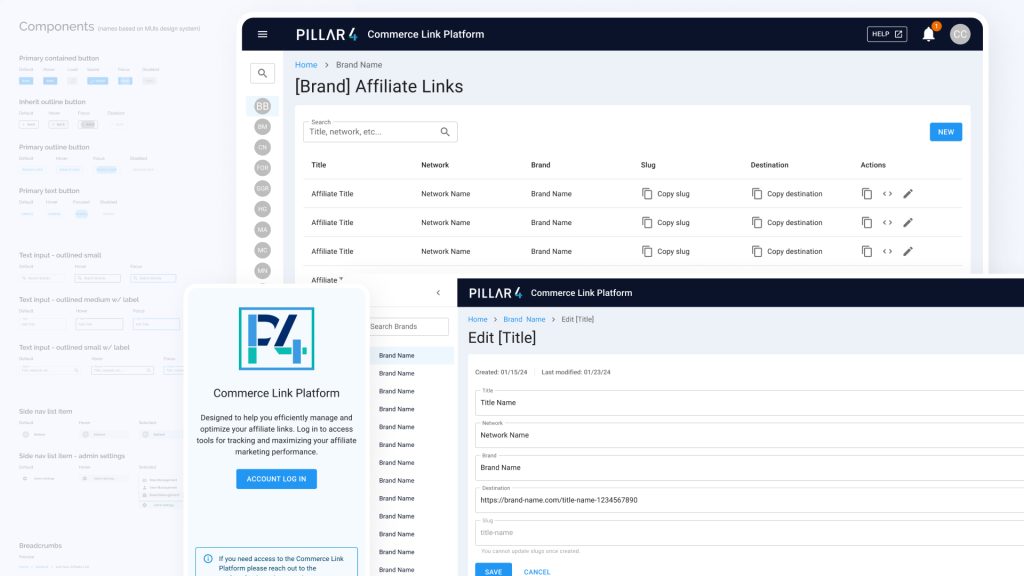
An internal platform that replaced manual link tracking across every Pillar4 brand.
Using Daily
of Truth
Swolverine
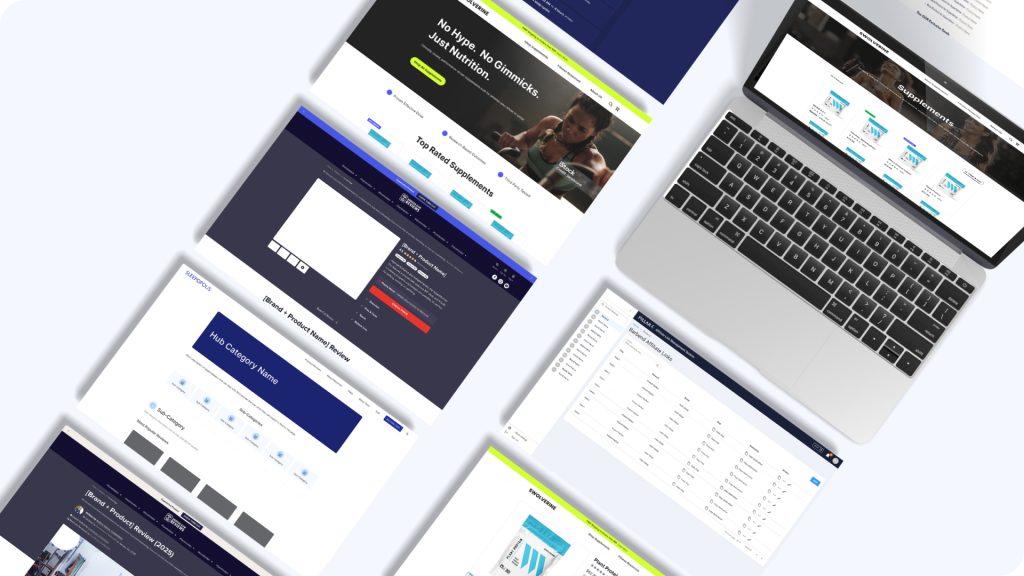
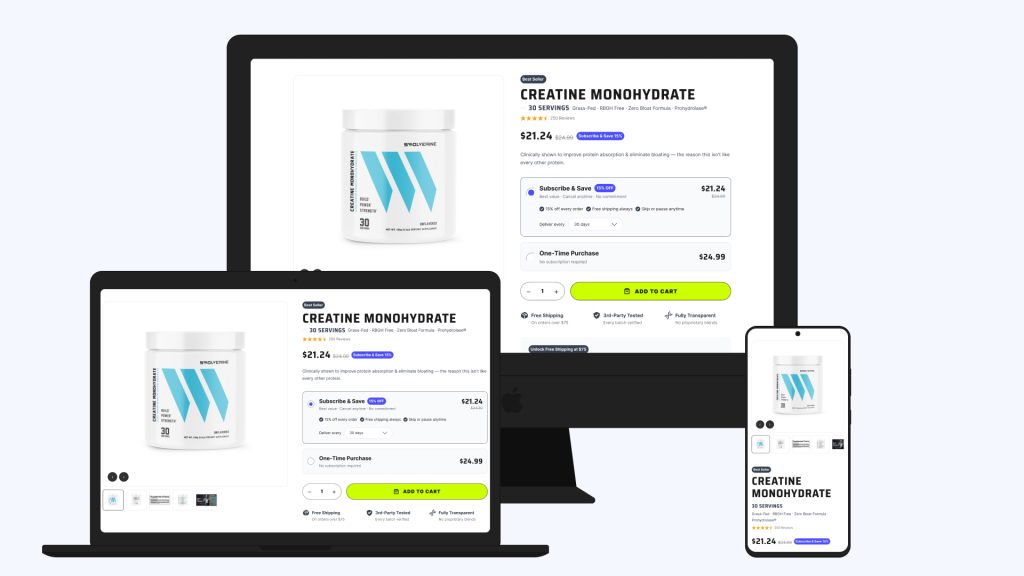
A full UX audit and redesign of a 100+ SKU supplement store, organized around ingredient education: navigation, product pages, and checkout.
SKUs Restructured
Connected Redesign Areas