Cross-Brand UX Strategy Across 20+ Owned and Partner Brands
I lead UX strategy and product design across 20+ owned and partner brands at Pillar4. Over three years, the experimentation program I lead design on has generated $25M+ in measurable revenue, alongside scaling shared design patterns and partnering with product, engineering, and editorial teams across the portfolio.
Measurable Results
$25 Million
Incremental revenue generated across owned and partner brands.
88.24% Increase
Experimentation output increased through structured testing processes.
+35.6% Lift
Average conversion rate improvement across major initiatives.
+11.3% Lift
Average take rate increase across monetized experiences.
+25.65% Lift
Average revenue per visit improvement.
+49.1% Lift
Highest performing conversion improvement from quiz optimization.
Business Landscape
Pillar4 operates a portfolio of high-traffic consumer brands alongside strategic publishing partnerships. Driving performance across this ecosystem required consistent UX standards, experimentation frameworks, and product systems that could scale across multiple brands and audiences.
Owned & Operated Brands
Pillar4’s owned brands generate revenue through high-intent organic traffic and affiliate commerce. Improving performance required aligning UX structure, experimentation, and product discovery across multiple sites.
- Sleepopolis
- Garage Gym Reviews
- BarBend
- Swolverine
- Mattress Nerd
- Mattress Clarity
- Morning Chalk Up
- Aging In Place
- Sleep Advisor
- Breaking Muscle
Partner Brands
Pillar4 also collaborates with major publishing and consumer brands, supporting UX improvements that strengthen product discovery and monetization while maintaining each partner’s brand standards.
- Self
- Fortune
- AARP
- NCOA
- Help Guide
- Eargo
- Yes Hearing
- Audien Hearing
- Medical Guardian
- Sports Illustrated
How UX Connects to Revenue
Over three years, design work tied directly to revenue planning, experimentation, and measurable outcomes.
Strategic Alignment
When I joined, UX was largely a support function. Design happened downstream of decisions that had already been made. I worked with product leadership to change that, putting UX into revenue strategy and experimentation planning from the start. Over three years, this shift contributed to $25M+ in incremental revenue across organic and paid initiatives.
Structural Consistency
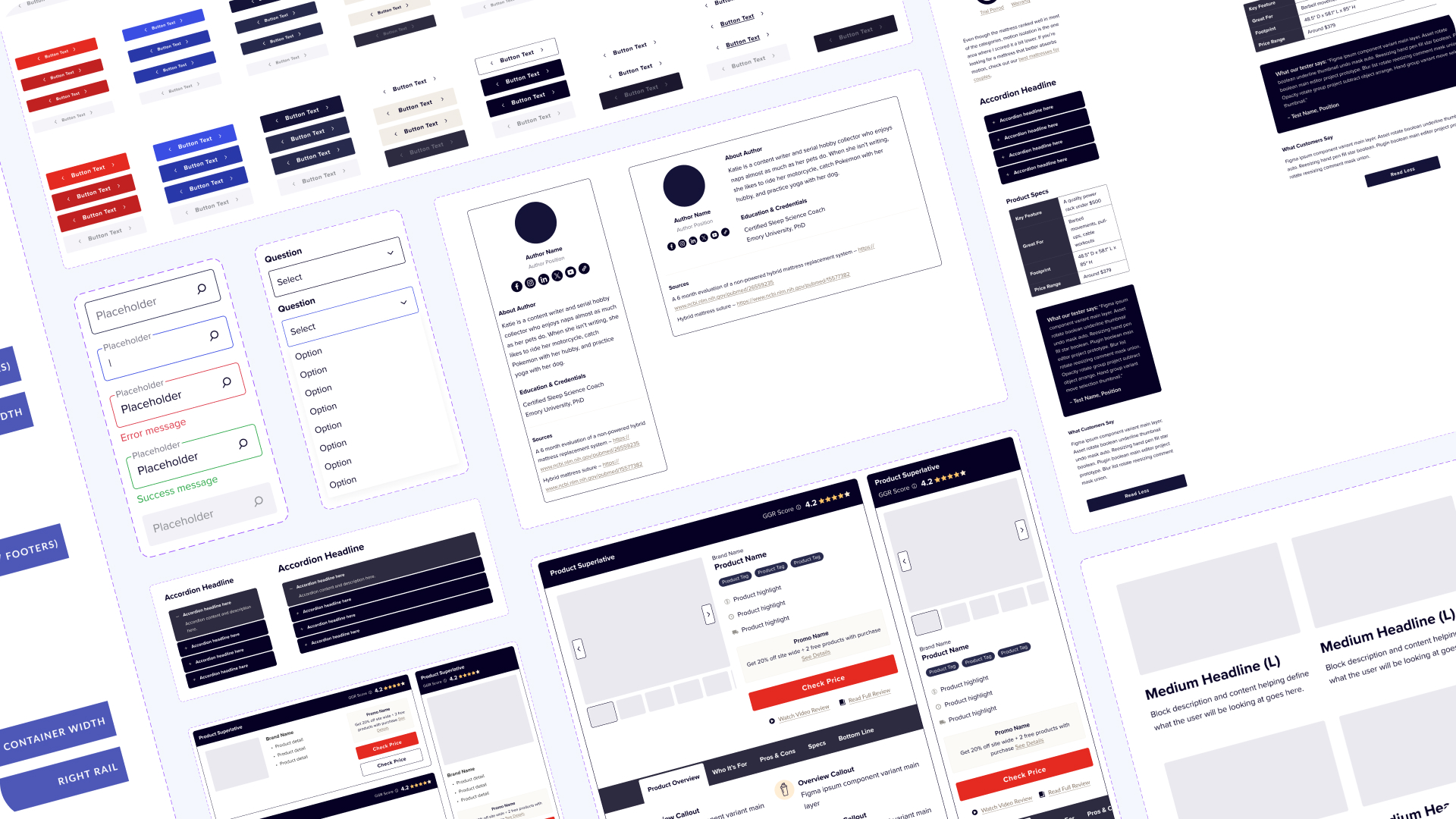
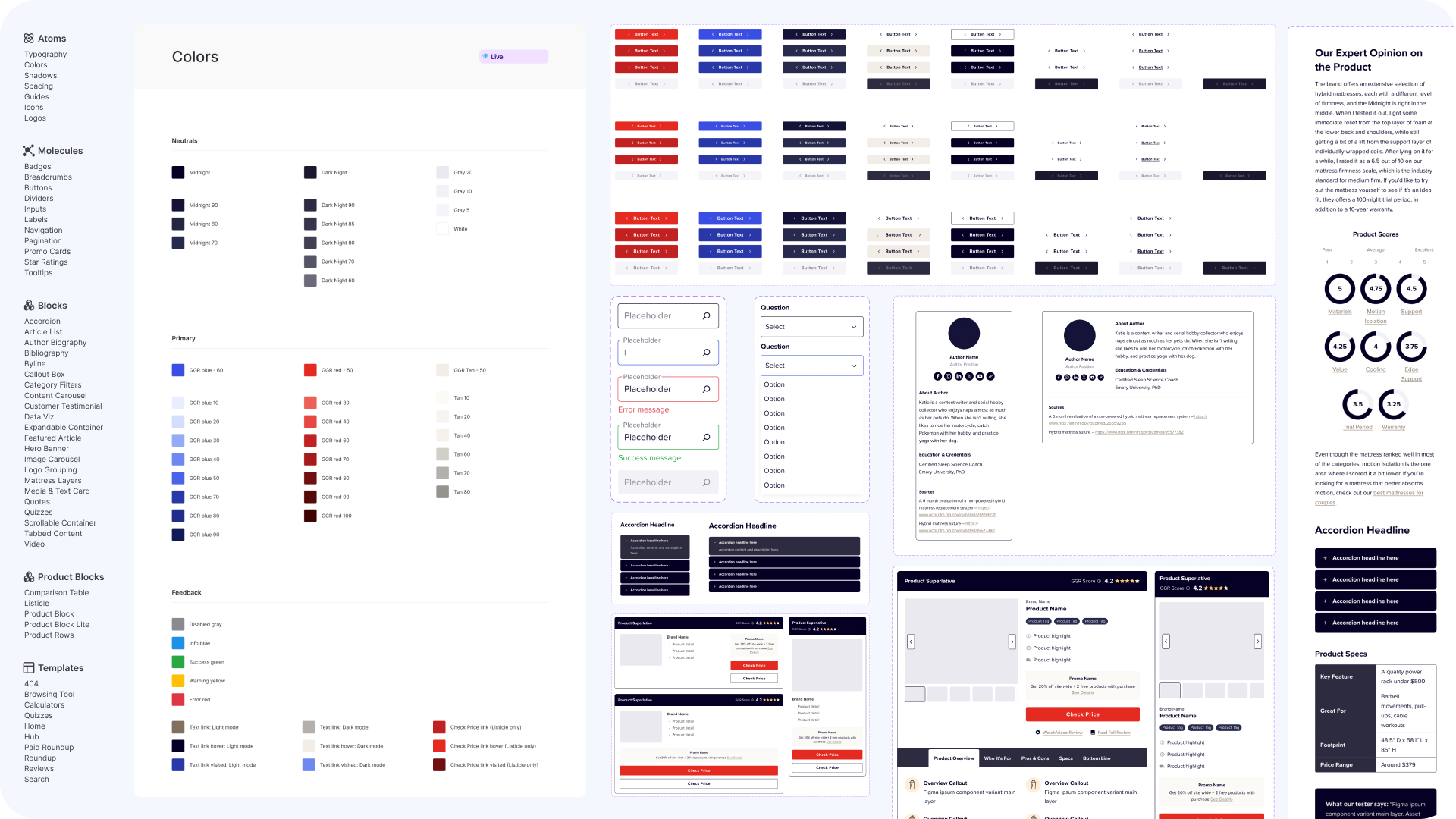
Working across 20+ brands meant I couldn’t design one-off solutions for every site. I built shared design patterns, standardized CTA hierarchy and monetization placement across templates, and rebuilt parts of the design workflow around Claude and Claude Code so the team could move faster on every test. The goal was to make performance improvements repeatable across the portfolio.
Performance Outcomes
Every UX decision tied back to a measurable outcome. Conversion rates, take rates, revenue per visit, and experimentation velocity all became part of how we evaluated design work. The metrics at the top of this page are the result of that shift in how we measured success.
Working Across Teams
Tighter coordination across product, paid media, and SEO teams turned individual test wins into portfolio-wide revenue gains.
Product & Engineering
Partnered with product managers and engineers to translate experimentation insights into scalable product improvements.
- Influenced backlog prioritization using experimentation data, shifting engineering investment toward the highest-revenue opportunities
- Reduced iteration cycles by formalizing testing workflows
- Cut design-to-code delivery time using Claude Code, shipping prototypes and test variants without a dev dependency
Paid Media
UX collaborated with paid media teams to optimize landing experiences and improve conversion performance.
- Designed and optimized paid landing templates tied directly to return-on-spend targets
- Standardized monetization hierarchy across paid experiences to reduce friction between ad intent and on-page content
- Improved revenue per visit through structural landing page improvements
SEO & Content
Worked closely with SEO and editorial teams to ensure UX improvements supported both ranking performance and user intent.
- Ensured monetization elements didn't disrupt search intent or ranking performance
- Refined comparison and review templates to balance editorial trust with revenue clarity
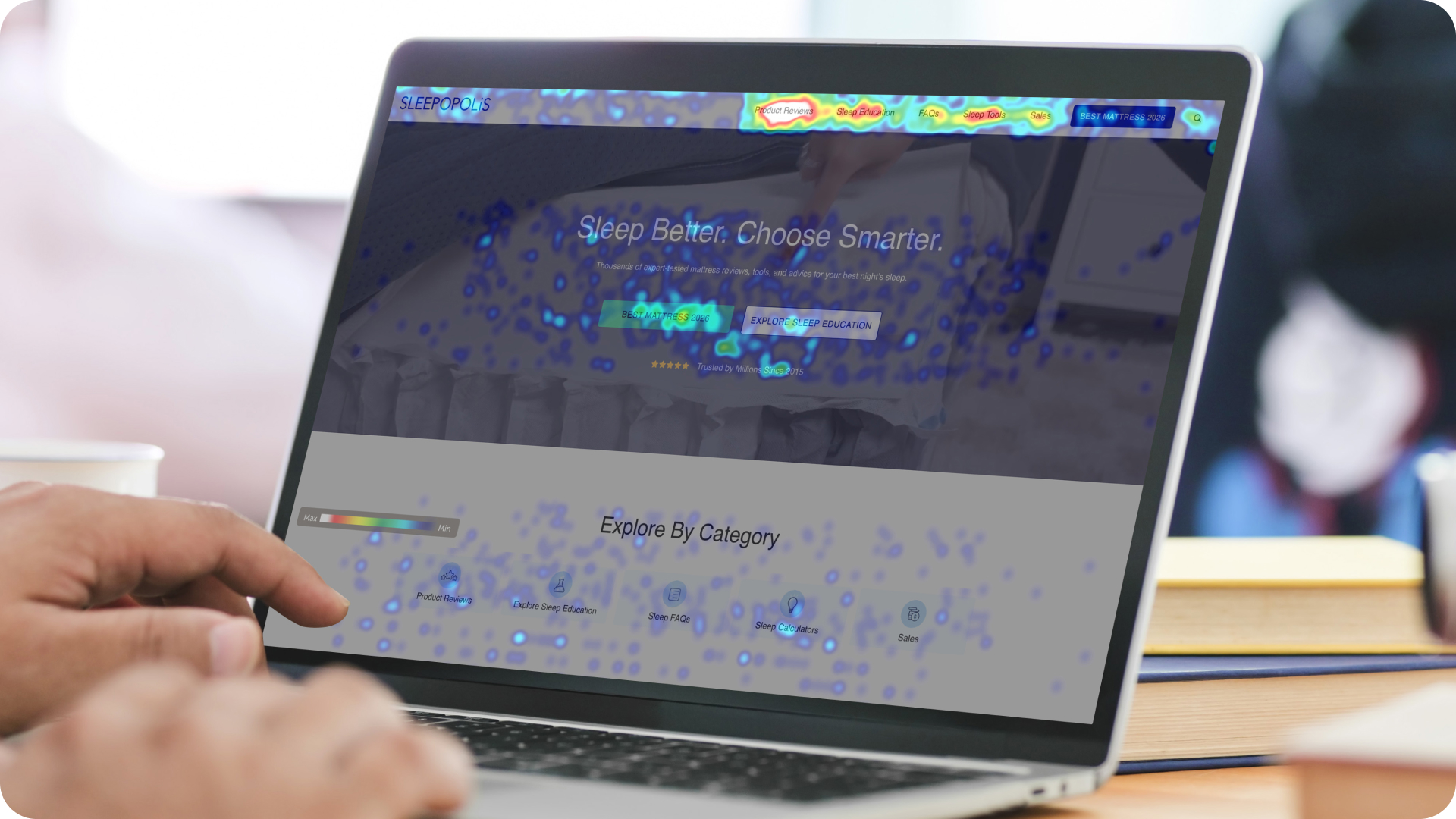
- Used behavioral data to inform layout changes on the highest-traffic organic pages
AI in the Design Workflow
AI is how I actually design now. Over the last year I’ve rebuilt pieces of my workflow around Claude and Claude Code, from pre-design research through post-design handoff. The work gets done faster and the team’s baseline output has moved up. Here’s where it shows up in practice.
Across the Design Lifecycle
AI shortens every phase of the design process.
- Pre-design research, competitor analysis, and strategy alignment built from structured prompting
- UX writing, marketing copy, and content variation generated and iterated in hours, not days
- Information architecture and user flow drafts produced with Claude, refined with the team
- Design generation through Figma MCP, turning prompts directly into editable Figma artifacts
Design-to-Dev in Hours, Not Days
AI has changed what design can deliver before engineering gets involved.
- Code generation for testing platform experiments, letting the team ship A/B tests without a dev dependency
- Production-ready prototypes used for stakeholder sign-off before handoff
- UI kit creation from live sites into Figma, cutting what used to be multi-day audits down to a few hours
- Design token generation and export automated into the dev handoff, reducing manual CSS work for engineering
Scaling AI Across the Org
The biggest gains come from AI as a team practice.
- Weekly AI working sessions with the design team to share workflows, prompts, and what's working
- Pushing AI adoption into product management and engineering so the whole team moves at the new pace
- Partnering with engineering on tokenization and block-level build patterns to reduce manual CSS across the site portfolio
- Treating prompt engineering as a shared craft, documented and iterated like any other part of the design system
Portfolio-Wide Applications
The strategic framework was applied across multiple brands, adapting UX systems to different audiences and monetization models.
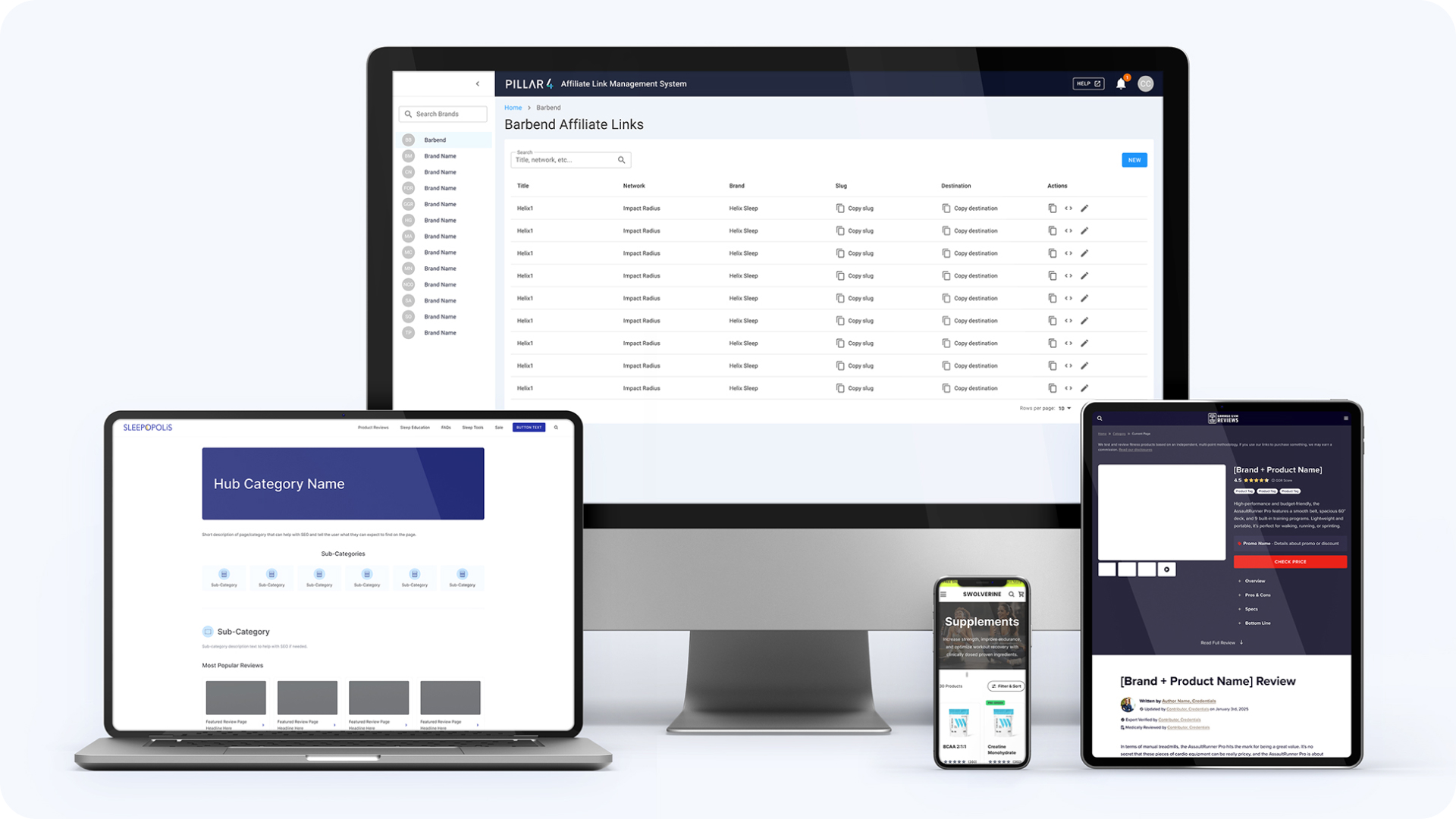
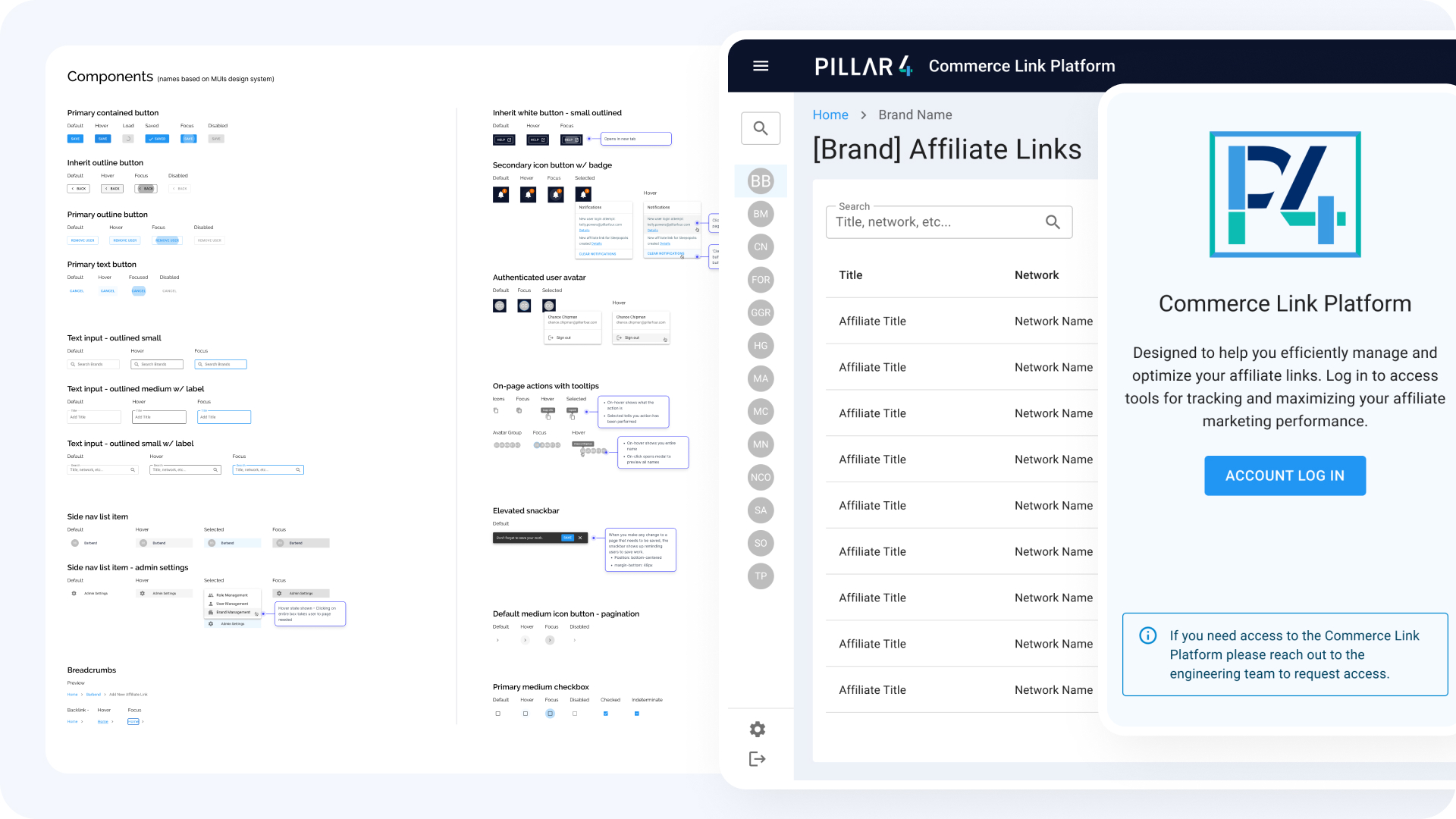
Commerce Link Platform
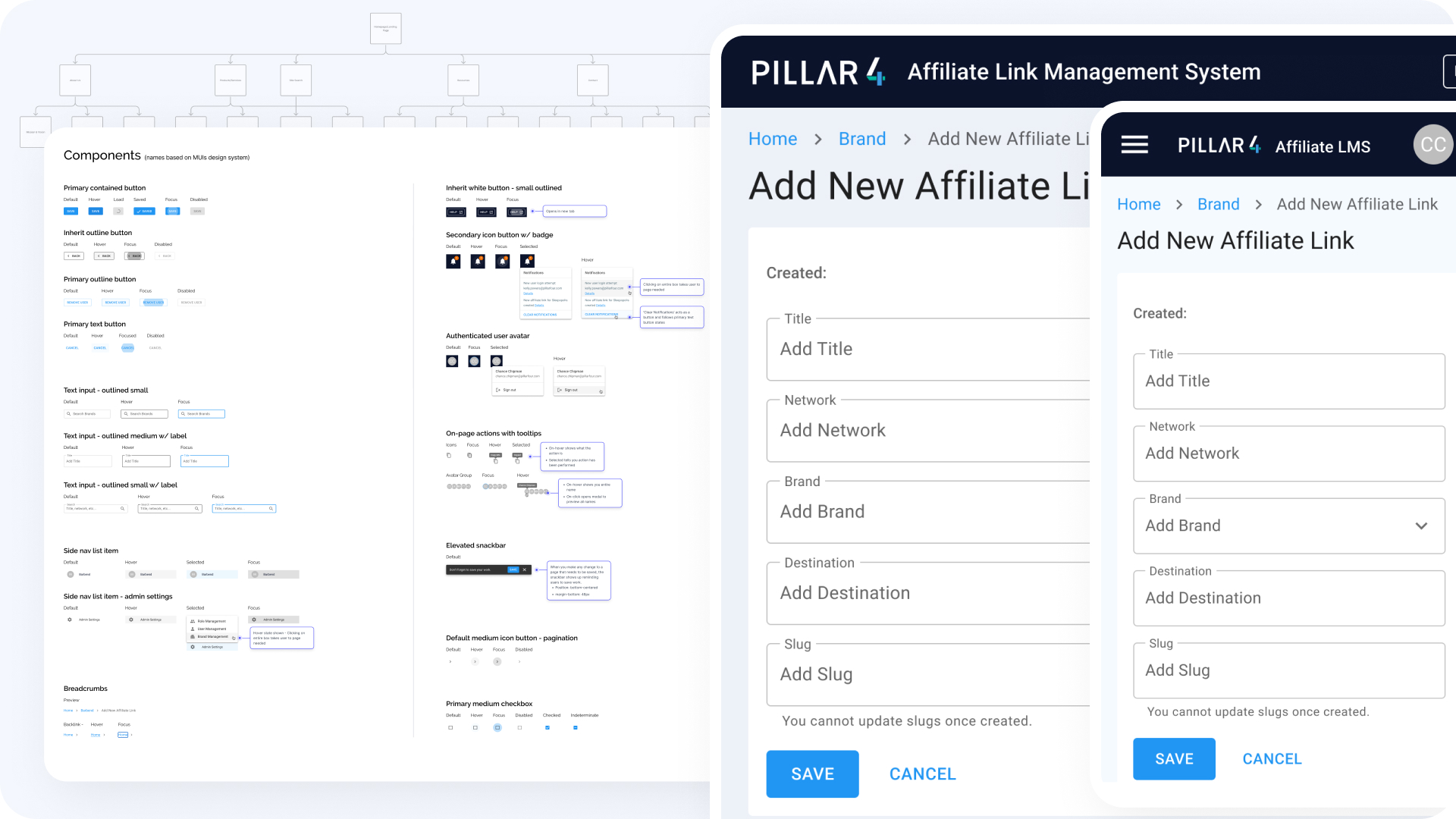
Designed an internal platform used across Pillar4 brands to manage and distribute affiliate links across high-traffic content and commerce experiences.
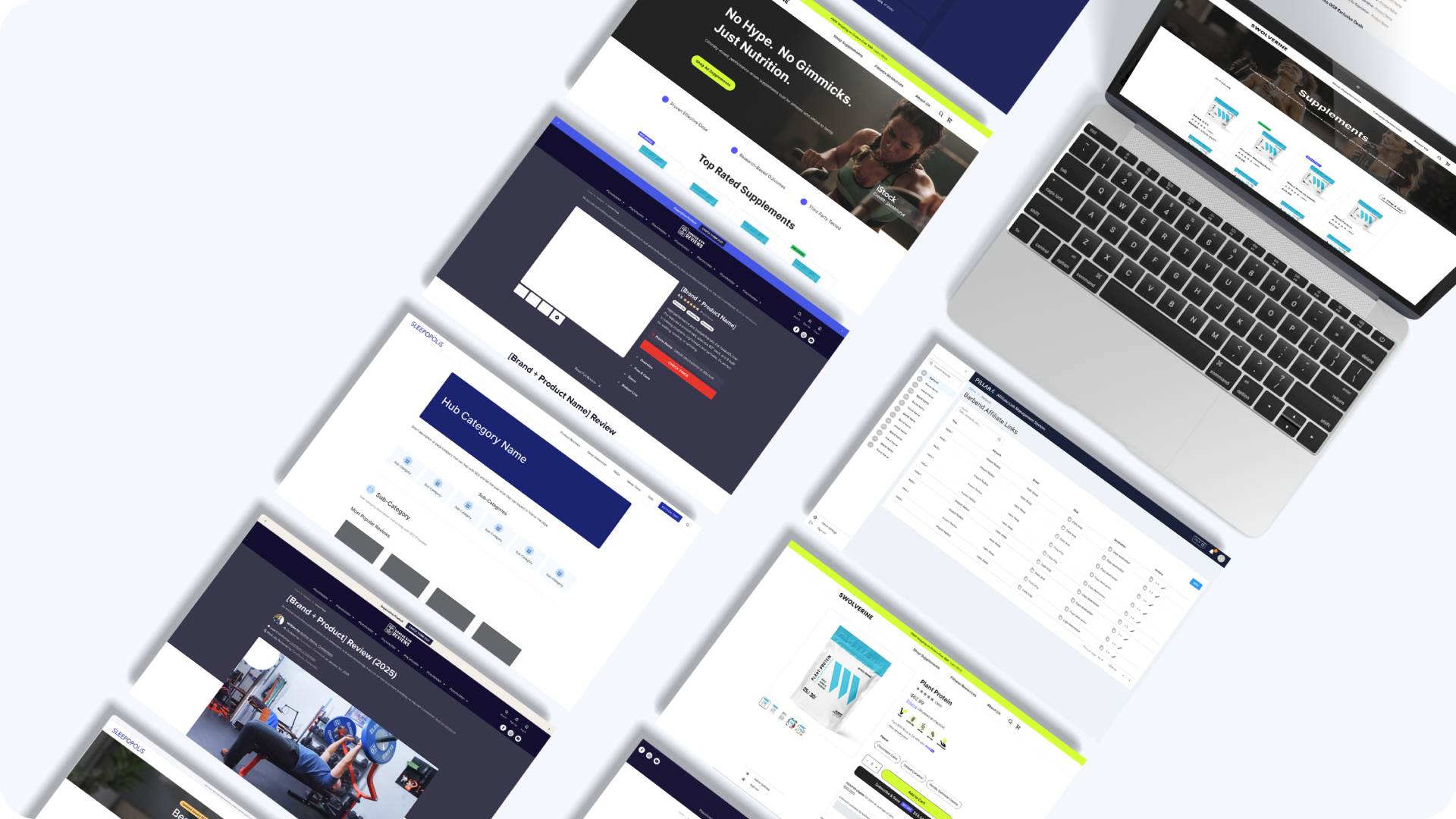
Sleepopolis
Led UX strategy and experimentation for a high-traffic affiliate platform, aligning search intent, content structure, and monetization pathways to drive sustained revenue growth.
Garage Gym Reviews
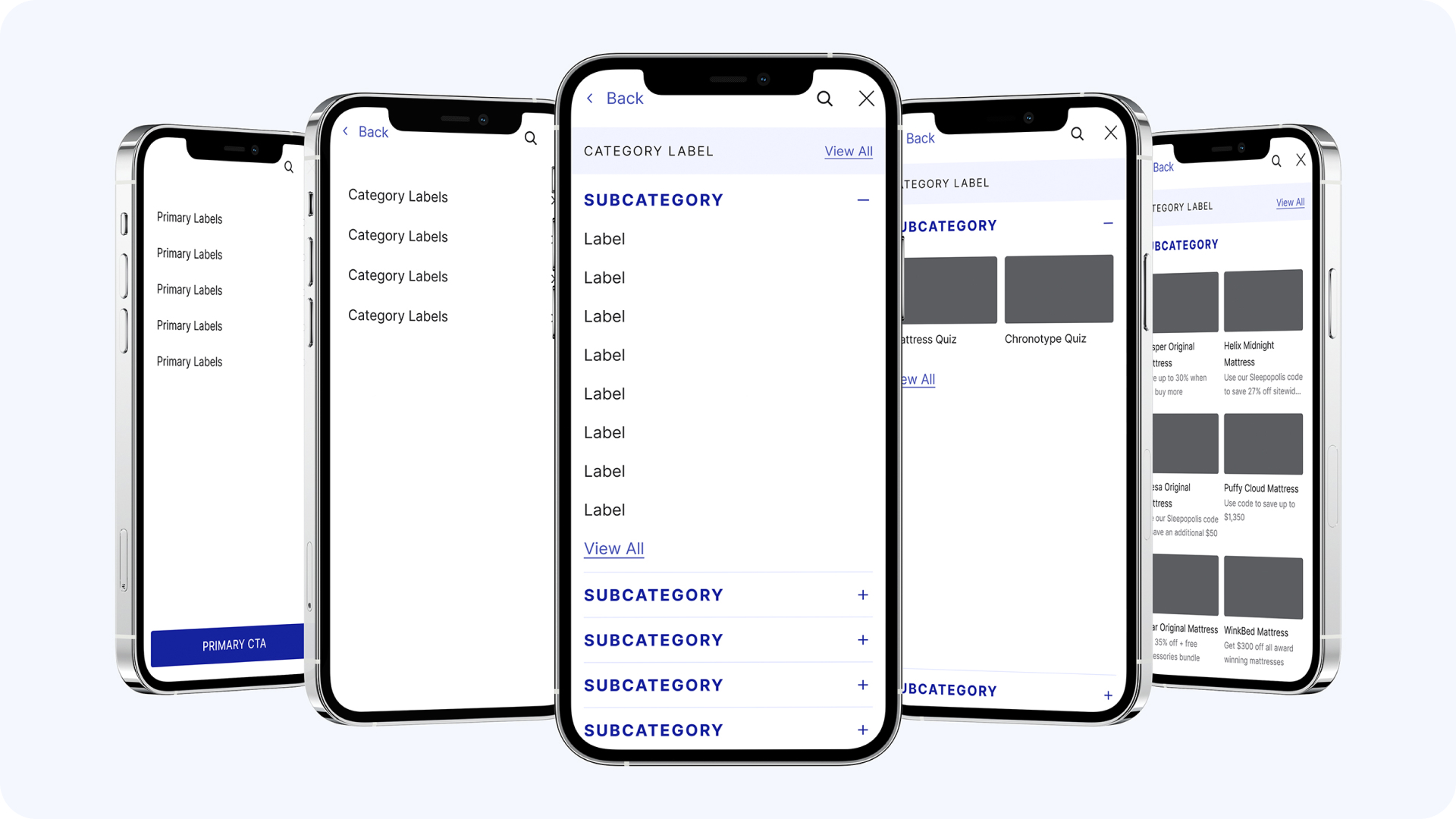
Led UX direction across Garage Gym Reviews, improving mobile usability, product discovery, and purchase decision clarity through structured experimentation and UX optimization.
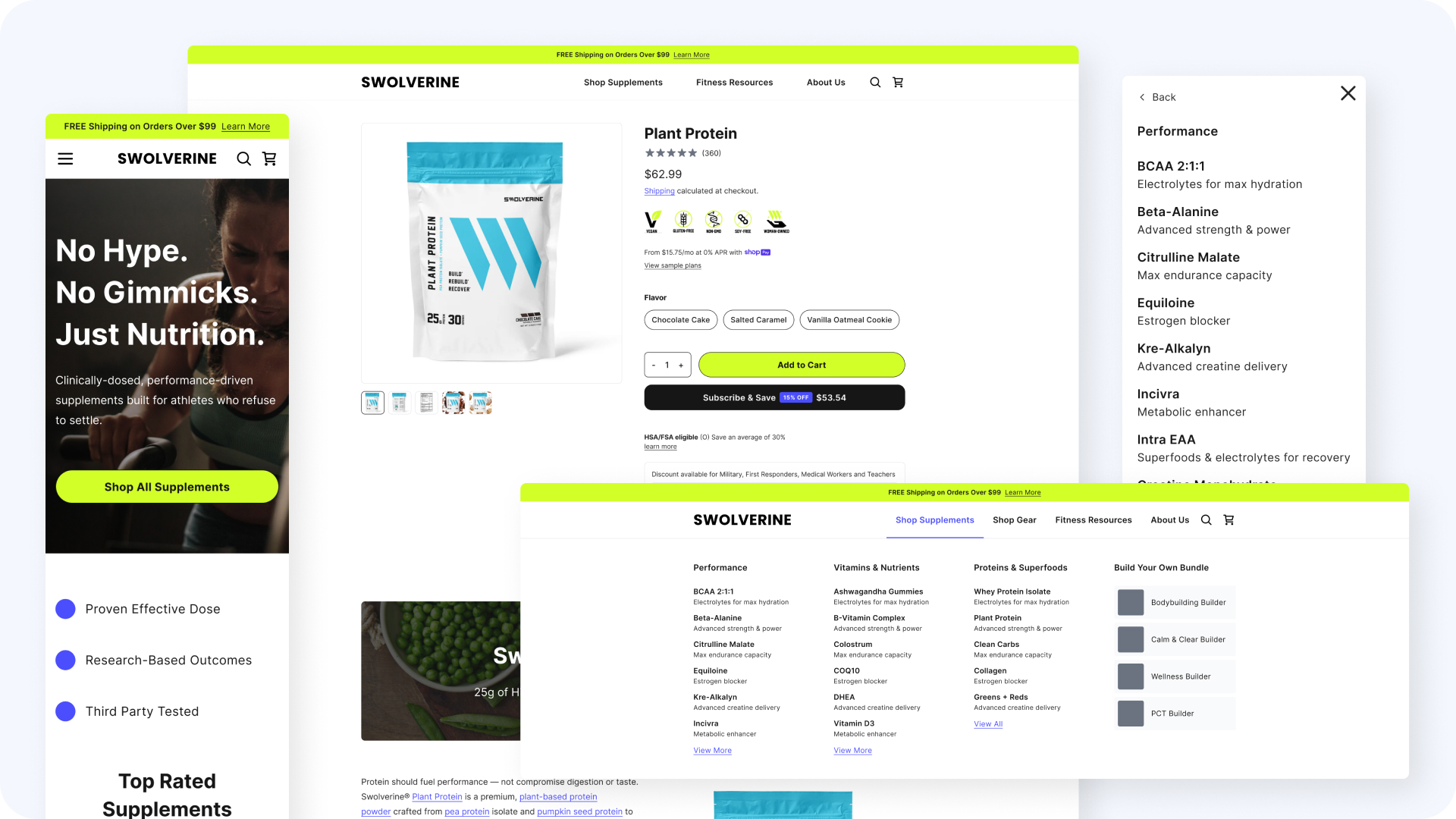
Swolverine
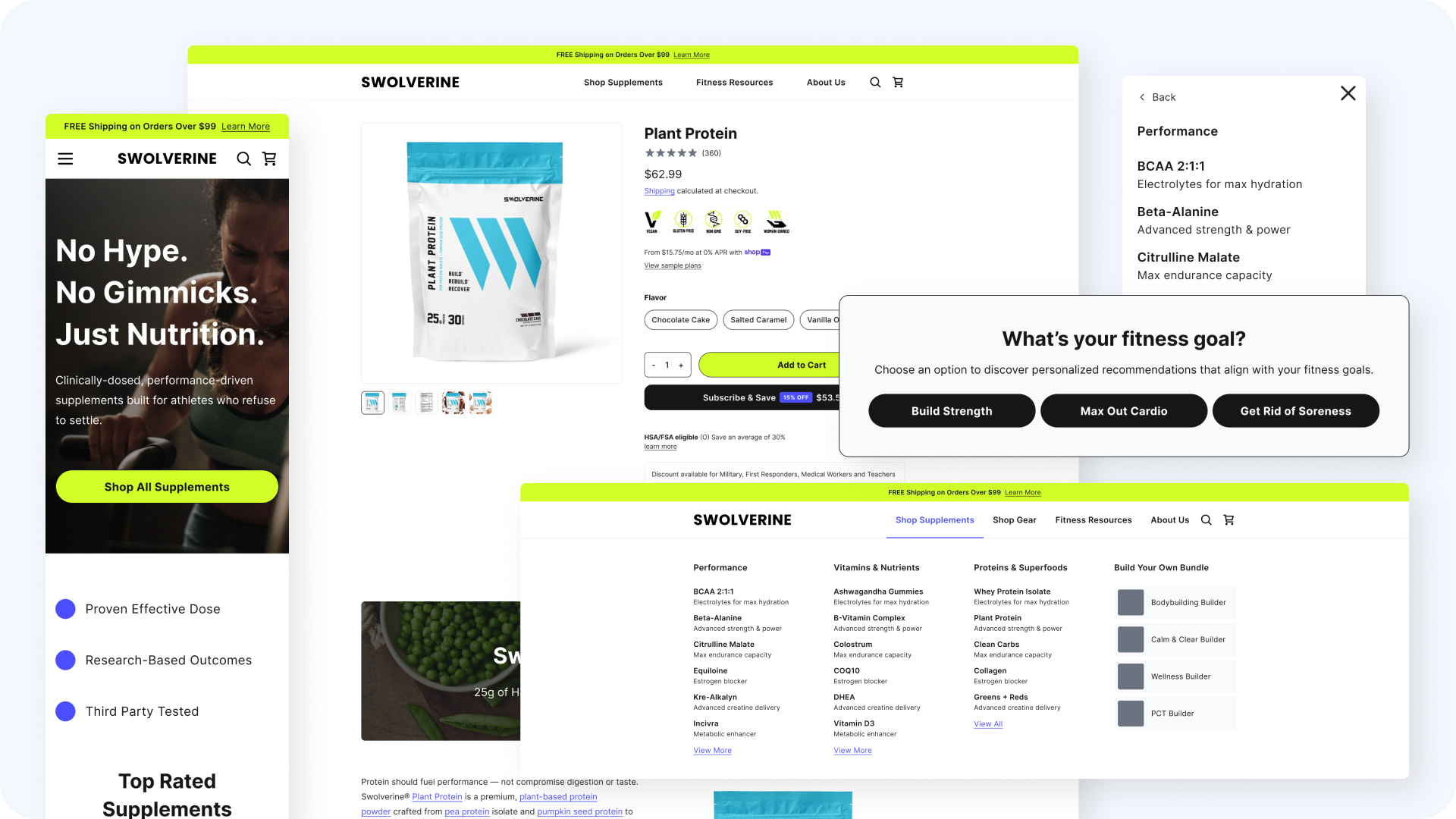
Conducted a full UX audit and led a redesign of the Swolverine ecommerce experience to improve product discovery, supplement education, and mobile usability.